

1. Philip Furse was born
<1650> and was buried on 27 Mar 1720 in Spreyton, Devon.
General Notes: Philip seems to have lived
most
of his life at Spreyton in Devon, certainly all his children were
baptised
there and he & his wife were buried there. Interestingly,
however,
amongst Furse family papers there is a lease for a term of one year to
Philip
from a Henry Bellew of Stockleigh English. The lease was granted
in
1680 by Henry Bellew to "his nephew Phillip Furse of Spreyton" and it
was for the Halsdon Estate
in the parish of Dolton; it is thought by the Furse family to be the
beginning
of its long connection with that property but how the property came
into
Furse ownership is not known. Perhaps, Philip purchased it at a
later
date.
Henry Bellew had a sister Elizabeth who married a John Furse at
Stockleigh English on 24th June 1639. It seems very likely therefore
that Philip Furse's parents were John and Elizabeth but no baptismal
record for a Philip Furse with that parentage has yet been found (2003)
to confirm that inference. Also, Henry's and Elizabeth's father was
Philip Bellew so Philip may also have taken his forename from his
maternal grandfather. 1,2
Philip married Elizabeth Clarke
1,4
on 16 Jul 1674 in Spreyton, Devon 1.,3 Elizabeth was buried on 27 Oct
1704 in Spreyton, Devon. 5
Children from this marriage were:
+ 2 M i. John Furse 4
was baptized on 24 Dec 1675 in Spreyton, Devon 6 and died before 1744.
3 M ii. Thomas
Furse 4 was baptized on 19
Jun 1677 in Spreyton, Devon. 7
+ 4 M iii. Philip Furse 4
was baptized on 28 Feb 1678/79 in Spreyton, Devon. 8
5 M iv. Marmaduke
Furse 4 was baptized on 29
Dec 1680 in Spreyton, Devon. 10
6 M v. Walter
Furse 4 was baptized on 1
Nov 1682 in Spreyton, Devon. 11
7 M vi. Henry
Furse 4 was baptized on 16
Sep 1684 in Spreyton, Devon 12
and was buried on 16 Apr 1685 in Spreyton, Devon. 4
8 M vii. William
Furse 4 was baptized on 25
Nov 1686 in Spreyton, Devon. 13
 Second
Generation
Second
Generation 2. John Furse
4 was baptized on 24 Dec 1675 in
Spreyton, Devon 14
and died before 1744.
General Notes: John was settled at Halsdon
at the time of the birth of his daughter Ann in 1706 and seems to have
remained there for the rest of his life, though surprisingly, unlike
his wife, he does not appear to have been buried in the parish.
It seems pretty certain that by that time the Halsdon Estate was in
the ownership of the Furse family and that John inherited it on his
father's death. Unfortunately, no Wills have survived for either him or
his father so it is not possible to confirm this point.
John married Joan Averay 1 in 1702.1 Joan was buried on 31 Jan 1743/44 in St Edmund's Church, Dolton, Devon. 15
Marriage Notes: John's and Joan's year of
marriage has not been confirmed by any church record so it may be that
it did not take place in 1702 as suggested in the account of Furse
family in Burke's Landed Gentry. If it did indeed take place in 1702,
then there was quite a long period (four years) during which they had
no children. Given Joan's fecundity in later years it is most unlikely
that Ann was their first born and in all probability there were earlier
children who died in infancy.
The Dolton parish registers record the burial of an Elizabeth Furse
on February 23rd 1707/08. However, this person is not credited as being
anyone's child — infants and small children were usually linked to a
parent
— but as there were no other Furses living in the parish at the time it
is difficult to suggest what else her relationship to John and Joan
might
have been except that of a daughter. 16
Children from this marriage were:
+ 9 F i. Ann Furse 17
was baptized on 23 Feb 1705/06 in St Edmund's Church, Dolton, Devon
17 and was buried on 16
Jun 1767 in St Edmund's Church, Dolton, Devon. 18
10 M ii. Thomas
Furse 17 was baptized in
1707 in St Edmund's Church, Dolton, Devon 20 and was buried on 11 Jan
1708/09 in St Edmund's Church, Dolton, Devon. 21
+ 11 M iii. Philip Furse 22,23 was baptized on 31 May 1709
in St
Edmund's Church, Dolton, Devon, 1,24 died on 16 Mar 1774 in
Barnstaple, North Devon 25
at age 64, and was buried on 21 Mar 1774 in St Edmund's Church, Dolton,
Devon. 26,27
12 M iv. Robert
Furse 29 was baptized on
30 Jul 1710 in St Edmund's Church, Dolton, Devon 30 and was buried on 15 Jul
1732
in St Edmund's Church, Dolton, Devon. 31
4. Philip Furse
4 was baptized on 28 Feb 1678/79
in Spreyton, Devon. 32
Philip married Mary Codner ,33,34
daughter of Samuel Codner and Unknown , on 6 Apr 1709
in Saint Savior, Dartmouth.9
Mary was baptized on 16 Jun 1684 in Ipplepen, Devon and was buried on
14 Mar 1711/12 in Spreyton, Devon. 34,35
Children from this marriage were:
13 F i. Elizabeth
Furse 36 was baptized in
1710 in Spreyton, Devon and was buried in 1710 in Spreyton, Devon.
37
14 M ii. Samuel
Furse 38 was baptized on
31 Jan 1710/11 in Spreyton, Devon 39,40 and was buried on 31
Mar 1712 in Spreyton, Devon. 41,42
Third
Generation 9. Ann Furse
17 was baptized on 23 Feb
1705/06 in St Edmund's Church, Dolton, Devon 17 and was buried on 16 Jun
1767 in St Edmund's Church, Dolton, Devon. 18
Ann married Robert Shute ,43,44
son of Robert Shute and Mary ——— , on 19 Nov 1733 in
St Edmund's Church, Dolton, Devon.19
Robert was baptized on 17 Jun 1706 in St Edmund's Church, Dolton, Devon
44 and was buried
on 7 May 1777 in St Edmund's Church, Dolton, Devon. 45
Children from this marriage were:
15 M i. John
Shute 44 was baptized on
19 Feb 1736/37 in St Edmund's Church, Dolton, Devon. 44
16 F ii. Ann
Shute 46 was baptized on
20 Nov 1739 in
St Edmund's Church, Dolton, Devon. 46
11. Philip
Furse 22,47 was baptized on 31 May 1709
in St Edmund's Church, Dolton, Devon, 1,48 died on 16 Mar 1774 in
Barnstaple, North Devon 25
at age 64, and was buried on 21 Mar 1774 in St Edmund's Church, Dolton,
Devon. 26,27 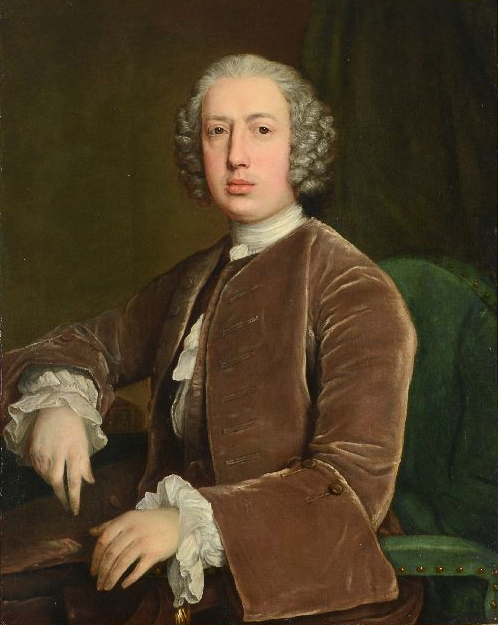
General Notes:
Philip inherited the
Halsdon estate
from his father and somehow acquired various other properties or
estates in
the area around Bideford and Barnstaple. A property at Appledore, near
Bideford,
may have come to him from his marriage to his first wife, Mary Nichols,
as
she seems to have grown up in the parish of Northam; the parish in
which
the village of Appledore lay.
All Philip's children with the exception of his youngest son, Philip,
were baptised St Edmunds Church, Dolton, which suggests that Philip was
living in the parish of Dolton at that time, probably after his father
died,
at Halsdon House. Some time about 1759/60, he and Grace went to live in
the parish of Barnstable because it was here that his younger son
Philip
was baptised in 1761 and where he and Grace died. 22,26
Some things about his life:
• Will signed: 15 May 1773. 49 Philip's Will, apart from some small legacies, was principally concerned with the disposal of his
lesser
estates
and property to his younger son Philip. These were in Braunton parish,
which
in those days included the town of Barnstaple, Appledore (near
Bideford) and
in the parish of Fremington (south west of Barnstaple). He also left
his
son Philip £1000; a sum which he later reduced to £700 in a Codicil.
There is no mention of his Halsdon Estate but after the small legacies
and his bequests to his son Philip, he left everything else to his
eldest surviving son Peter.
Amongst the legacies that he left were £40 apiece to his daughter Mary
and her husband John Partridge. Mary and John had only been married
about six weeks at the time Philip drew up his Will and the £1000
that Philip had already given Mary on her marriage is referred to in
it.
In the 1st codicil to his Will, Philip increased his legacies to Mary
&
John to £50 apiece and in his 2nd codicil, presumably drawn up soon
after Mary's first child arrived, he left £100 to his newly born
grandson John Partridge.
One interesting feature of Philip's Will is that he left several
relatives and kinsfolk a Moidore — a Portuguese gold coin — with which,
he proposed, they should purchase a ring in memory of him.
He appointed his brother in law Lewis Wellington and his friend (and
perhaps kinsman of his wife¹) Henry Hole his executors.
NOTE
¹ Henry Hole's mother was a Rebecah Wellington and it is very likely that she was related to Philip's second wife, Grace Wellington.
• Probate Granted: 14 Apr 1774. 49 Philip's Will was proved at London by his two executors Lewis Wellington and Henry Hole.
Philip married Mary Nichols ,50 daughter of William Nichols and Joan Kerne , on 7 Mar 1736/37 in Northam, Devon.28 Mary was baptized on 21 Dec 1714 in Northam, Devon 51 and was buried on 19 Jun 1739 in St Edmund's Church, Dolton, Devon. 52,53
General Notes: Mary is very likely to have been a kinswoman of Elizabeth Nichols who married Peter Wellington - it is possible that Elizabeth was an aunt of Mary's.
Medical Notes: Mary died a few days after giving birth to her first child.
The child from this marriage was:
17 F i. Mary
Furse 54 was baptized on
12 Jun 1739 in St Edmund's Church, Dolton, Devon 54 and was buried on 27 Apr
1742
in St Edmund's Church, Dolton, Devon. 55
Philip Philip next married. Grace Wellington ,22 daughter of Peter Wellington and Elizabeth Nicholls , on 25 Apr 1744.1 Grace was baptized on 10 Dec 1719 in St Giles-In-The-Wood, Devon, 56 died on 16 Oct 1763 in Barnstaple, North Devon 57 at age 43, and was buried on 19 Oct 1763 in St Edmund's Church, Dolton, Devon. 58
General Notes: Grace's forebears owned the
Manor of Way in the parish of St Giles in the Wood for a generation or
two and her father, mother and brother Lewis are buried in the church
and churchyard there.
The Manor of Way later came to be owned by Grace's son Peter according
to various accounts so it may well be that it came into the Furse
family because her brother Lewis, who seems to have died without issue,
left it to his nephew.59,60
Children from this marriage were:
18 F i. Elizabeth
Furse 61 was baptized on
26 Jun 1745 in St Edmund's Church, Dolton, Devon 61 and was buried on 31 Jan
1750/51
in St Edmund's Church, Dolton, Devon. 62
+ 19 F ii. Mary Furse 63
was baptized on 13 Jan 1745/46 in St Edmund's Church, Dolton, Devon
64 and was buried on 16
Apr 1833 in St Michael And All Angels Church, Great Torrington, Devon.
20 M iii. John
Furse 66 was baptized on
30 Apr 1749 in St Edmund's Church, Dolton, Devon 66 and was buried on 21 Aug
1764
in St Edmund's Church, Dolton, Devon. 67
21 F iv. Elizabeth
Furse 68 was baptized on
27 May 1751 in St Edmund's Church, Dolton, Devon 68 and was buried on 11 Jan
1754
in St Edmund's Church, Dolton, Devon. 69
22 M v. Philip
Furse 70 was baptized on
27 Jun 1753 in St Edmund's Church, Dolton, Devon 71 and was buried on 17 Jun
1760
in St Edmund's Church, Dolton, Devon. 72
+ 23 M vi. Revd. Peter Wellington Furse 22,73
was baptized on 23 Dec 1755 in St Edmund's Church, Dolton, Devon, 74 died on 8 Feb 1832
22,75
at age 76, and was buried on 15 Feb 1832 in St Edmund's Church, Dolton,
Devon. 76,77
24 M vii. Thomas
Furse 80 was baptized on
17 May 1758 in St Edmund's Church, Dolton, Devon 80 and was buried on 31 Dec
1758
in St Edmund's Church, Dolton, Devon. 81
+ 25 M viii. Philip Furse 82
was born in 1761, was baptized on 28 Jan 1761 in Barnstaple, North
Devon, 83,84 and died on 6 Jan 1847
85 at age 86.
Fourth
Generation 19. Mary Furse
63 was baptized on 13 Jan
1745/46 in St Edmund's Church, Dolton, Devon 64 and was buried on 16 Apr
1833 in St Michael And All Angels Church, Great Torrington, Devon.
Mary married John Partridge ,
son of
John Partridge and Mary Bidgood , on 24 Mar 1773 in St
Peter's
Church, Barnstable, Devon.65
John
was baptized on 4 Oct 1738 in Witheridge, Devon 87 and was buried on 30 Oct
1781
in Witheridge, Devon.
The child from this marriage was:
26 M i. John
Partridge 88 was baptized
on 9 Jan 1774 in Witheridge, Devon, 88
died in Wood Town, Alverdiscott, Devon, and was buried on 8 Feb 1845 in
St Michael And All Angels Church, Great Torrington, Devon.
John married Anne Jervis . Anne was born <1778>, died in Wood Town, Alverdiscott, Devon, and was buried on 26 Feb 1840 in St Michael And All Angels Church, Great Torrington, Devon.
23. Revd.
Peter Wellington Furse 22,73 was baptized on 23 Dec 1755
in St
Edmund's Church, Dolton, Devon, 74
died on 8 Feb 1832 22,75 at age 76, and was
buried on 15 Feb 1832 in St Edmund's Church, Dolton, Devon. 76,77
General Notes: Though Peter took holy
orders, he does not seem to have been a curate or ever taken a living,
indeed, having inherited the Halsdon Estate (albeit perhaps only a life
interest — see his Will) and the Manor of Way in St Giles in the Wood,
he devoted himself to managing those properties and civic duties in the
town of Great Torrington where he and Mary lived most of their married
lives.
Mary is said to have been unhappy at Halsdon House, near Dolton, which
must have seemed very isolated in those days for someone who had been
brought up in a town. However, the early days of her married life do
seem to have been spent there for not only are all her children
baptised in the parish church but also, her mother is known to have
lived there towards the end of her life. There is a walk in the grounds
of the Halsdon House known as Elizabeth Johnson's Walk from
which it is said she could see the church at Torrington. A stone now
commemorates that walk.
At some stage, probably not long after her daughter Mary Grace died
in 1803, Mary wearied of living so far away from Great Torrington and
persuaded Peter to build a town house for her there which they also
called Halsdon House; it was on the corner of South Street and the east
side of Whites Lane but it no longer exists. This then became their
principal residence and Peter and Mary lived out their lives there.
Peter was Mayor of Great Torrington in the years 1803-4, 1810-11,
1820-21 and 1825-26 and held other civic posts in the town. 89
Some things about his life:
• Will: 17 Jun 1831. 90 Peter's actual Will does not
seem to have survived the World War II bombing raid on Exeter which
destroyed many Devonian records. However, the Estate Duty record of its
main provisions has been preserved in the National Archives (formerly
the Public Record Office).
At the time of his death, Peter owned and lived in Halsdon House in
Great Torrington and he might also have still had an interest in the
Halsdon estate near Dolton where his son John was living. Peter left
Mary a life interest the content of the house in Great Torrington and,
though the Estate Duty record does not confirm this, most likely the
right to live there as long as she chose. Certainly, she was living
there at the time of the 1841 Census. Mary also received a legacy of
£100 and all Peter's wine and liqueurs. The Estate Duty record does not
mention any annuity for Mary, so what she received by way of income is
unclear, perhaps, it had already been settled in the Marriage
Settlement made between them in 1789.
Apart from a legacy of £100 apiece to his two daughters, Theresa
Johnson and Elizabeth Yonge, and £20 apiece to his two servants,
Elizabeth Sanford and John Plucknit, Peter left all the rest of his
estate to his
son John who also was to receive all the linen, household furniture,
plate,
books, &c., on Mary's death.
It is strange that there appears to be no specific mention of the
Halsdon estate in either Peter's Will or that of his father Philip. Nor
does the valuation of Peter's estate on his death (see probate note)
seem to be high enough to include the Halsdon Estate so perhaps neither
he or his father was ever the beneficial owner of it and that it came
into the possession of successive generations of the Furse family by
way of some earlier trust.
• Probate Granted: 14 Jul 1832,
Archdeaconry Of Barnstable. 90
Peter's son John was the Executor of Peter's Will. Peter's estate was
first valued at £2000 but this seems to be have been revised downwards
later to £1500.
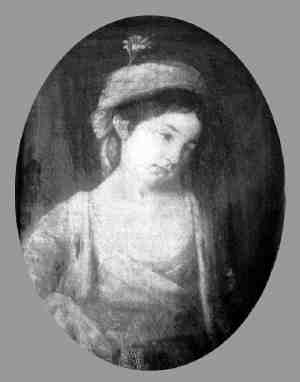
Peter married Mary Johnson ,22 daughter of William
Johnson and Elizabeth Reynolds , on 13 Sep 1789 in St
Michael And All Angels Church, Great Torrington, Devon 22,78.,79 Mary was baptized on 21 Aug
1759 in St Michael And All Angels Church, Great Torrington, Devon,
91 died on 10 Dec 1845 in
Great Torrington, Devon 92,93,94
at age 86, and was buried on 15 Dec 1845 in St Edmund's Church, Dolton,
Devon. 95,96
Children from this marriage were:
+ 27 F i. Theresa Johnson Furse 97,98
was born <Aug 1790>, was baptized on 28 Aug 1790 in St Edmund's
Church, Dolton, Devon, 99
died on 30 Jul 1851 in Sidmouth, Devon 100
at age 61, and was buried on 5 Aug 1851 in St Michael And All Angels
Church, Great Torrington, Devon. 101
28 M ii. Wellington
Furse 103 was baptized on
15 Oct 1791 in St Edmund's Church, Dolton, Devon 104 and was buried on 8
Oct 1794 in St Edmund's Church, Dolton, Devon. 105
+ 29 F iii. Elizabeth Furse 22,106 was baptized on 1 Feb 1793
in St Edmund's Church, Dolton, Devon 107
and died on 8 Jun 1876 in Westhayes, Rockbourne, Fordingbridge,
Hampshire 1,108 at age 83.
+ 30 M iv. John Henry Furse 109
was baptized on 13 Sep 1794 in St Edmund's Church, Dolton, Devon, 110 died on 1 Aug 1854 in
Halsdon, Dolton, Devon 75,111 at age 59, and was
buried on 8 Aug 1854 in St Edmund's Church, Dolton, Devon. 112,113
31 F v. Mary
Grace Wellington Furse 115
was buried on 22 Nov 1803 in St Michael And All Angels Church, Great
Torrington, Devon. 116
25. Philip
Furse 82 was born in
1761, was baptized on 28 Jan 1761 in Barnstaple, North Devon, 84,117
and died on 6 Jan 1847 85
at age 86.
General Notes: As the youngest son, Philip
seems to have been remarkably successful, accumulating, as he did, a
sizeable fortune. (See Probate Note)
In the early days of his adult life Philip lived in Bristol and
described himself as an ironmonger. The trade of iron mongering in the
late 18th-century was not as we would understand it today (2003); in
those times, before industrialisation, most things made from iron would
have been manufactured locally, often
starting with the iron ore. An ironmonger might have employed smelters,
blacksmiths as well as men to sell the products. Whether or not this
was
the case with Philip's business has not been discovered but clearly he
made a considerable amount of money out of that trade and possibly out
of other successful business ventures.
In later years he moved to Exeter but it is not known whether or not he
continued in the iron mongering trade there. He seems to have been an
astute businessman and his lengthy Will (12 pages in all) is full of
advice to his Trustees and Executors.
His father had left him an interest in some properties near Barnstaple
and Bideford but by the time he died these had been let go and others
had been acquired. When he died, his principal properties were a
leasehold house in Exeter, which he had retained after "retiring" to
another leasehold house in the village of Kenton, south of Exeter
towards the mouth of the river Exe, and a freehold estate called Shepherds
at Clyst St Mary.
118
Some things about his life:
• Will signed: 19 Jul 1845. 118 When Philip came to make his
last
Will he must have known that his daughter Mary, who was then married to
John
Guitton, was not going to produce any children - Mary by that time was
in
her fifties - and he, therefore, concentrated on making sure that his
property,
after Mary's death, was passed down to his nearest, surviving male
relation
taken in order of seniority. Such a person would be a son or grandson
of
one of his two Furse nieces, Theresa wife of Charles William Johnson
and
Elizabeth wife of the Rev. William Yonge.
In practice this meant that his estate would go first to Charles
Wellington Johnson who was Theresa's eldest son and thence to his
oldest surviving son and, in default of Wellington having a son to
inherit the property, it
was to go to Theresa's next son William or to William's oldest
surviving son and if William had no son to inherit, it was to go to
Elizabeth's only son William Johnson Yonge or to his oldest surviving
son. In the event, Wellington Johnson inherited the estate and it
eventually passed on to his eldest son.
Philip was also determined that the name of Furse and the Furse Arms
should continue. He laid down that anyone who became entitled to the
property, under the rather complex chain of inheritance set out above,
must use the name of Furse and carry the Arms of Furse and, moreover,
they were required to change their name by Deed Poll or Act of
Parliament within 12 calendar months of inheriting.
It is interesting to speculate whether the above arrangements that
Philip adopted were an original idea of his or whether the Furse family
had used them before. If they had, then that would go some way to
explaining why it was that the Halsdon Estate is not specifically
mentioned in Philip's father's and elder brother's Wills.
Philip left his wife Eliza the use of Kenton Cottage (a leasehold
property in the village of Kenton) and £300 per annum during her
lifetime. He also gave her much of the household goods, &c,
including, surprisingly, her own clothes, trinkets and
jewellery. However, he specifically excluded most of the valuable items
(plate, pictures, china, glass, books, furniture, &c.). These were
to be held by his Trustees with his wife having the use of them during
her lifetime. The Trustees were instructed to make an inventory of
these items as soon as possible after his death, presumably, to ensure
that they did not go missing!
Philip's daughter Mary was entitled to the income from his freehold
estate Shepherds at Clyst St Mary during her lifetime and to
any
other income that might become available from his estate as time went
on. On her death this entitlement was to pass first to Wellington Furse
has
described earlier and this it duly did when she died in 1885.
Philip added a Codicil to his Will shortly before he died giving his
two nieces (see above) £100 apiece, the poor of Kenton parish £30, to
be distributed in food or clothing, his three executors £50 apiece and
his servants, of which there were four, £10 apiece in addition to their
wages. He also left each of his servants an annuity "in token of their
faithful service" - his footman Thomas Jones £20 per annum, his
housekeeper Harriet Bullen £10 per annum, and two other servants Jane
Walter and Caroline Bradbeer £5 per annum each.
• Probate Granted: 8 Feb 1847, London. 119,120
Personal Estate: under £40,000. Resworn 15 November 1848, under £30,000.
When Philip's daughter Mary died in 1885 Legacy Duty was payable and
the surviving Executor declared to the Inland Revenue that the residue
of
the estate amounted to £34,064 11s 0d.
Philip married Margaret Bickley daughter
of William Bickley (ironmaster)
and Mary Homer of Bilston,
Staffordshire, on 25 Jan 1791 at St Peter's Church, Wolverhampton.
Margaret was born in <1771> and died 1 Feb 1794 at Bristol at age
23.
The child from this marriage was:
32 F i. Mary
Furse was born <1793> and died on 28 Nov 1885 in Marylebone,
London 121 at
age 92.
Mary married John Guitton on 27 Apr 1813 in St David, Exeter.122 John died <1856>. Mary later married Percy Percival.
Philip next married Bridget Bickford ,123,124 daughter of George Bickford and Mary Palfreman , on 21 Dec 1802 in Bradford, Devon.86 Bridget was baptized on 9 Dec 1763 in Okehampton, Devon, 124 died on 9 Jan 1804 125 at age 40, and was buried in St Stephen's Church, Bristol.
General Notes: When Bridget died one or more memorial rings were made, in what is probably pinchbeck, and engraved with the following inscription "Bridget Furse Ob: 9 Jany1804 Aet. 40.". One of these rings, which will only just fit on to a man's little finger and may, therefore, have been made for a woman, has been passed down through various generations of the family since Bridget died and is now (2003) in the possession of J. R. U. Green.
Philip next married Elizabeth Marshall , daughter of Revd. John Marshall and Mary Hawtrey , on 12 Oct 1819 in St Peter Cathedral, Exeter. Eliza was born in 1773, was baptized on 26 Aug 1773 in St Lawrence Church, Exeter, 126 and died on 3 Aug 1858 in St Thomas, Exeter 85,127 at age 85.
Fifth
Generation 27. Theresa
Johnson Furse 97,98 was born <Aug 1790>,
was baptized
on 28 Aug 1790 in St Edmund's Church, Dolton, Devon, 99 died on 30 Jul 1851 in
Sidmouth, Devon 100
at age 61, and was buried on 5 Aug 1851 in St Michael And All Angels
Church, Great Torrington, Devon. 101
Theresa married Charles William Johnson ,97 son of Daniel Johnson and Bridget Cory , on 5 Sep 1811 in St Michael And All Angels Church, Great Torrington, Devon 97.,102 Charles was born on 3 Oct 1780 in Great Torrington, Devon, 22 was baptized on 18 Dec 1780 in St Michael And All Angels Church, Great Torrington, Devon, 128 died on 21 Sep 1854 in 42 South Street, Great Torrington, Devon 1,97,129 at age 73, and was buried on 25 Sep 1854 in St Michael And All Angels Church, Great Torrington, Devon. 130
General Notes: After their mother died in
1791 Charles and the other younger members of the family were looked
after by relatives in Great Torrington, possibly the Palmers -- not a
happy time by all accounts -- but Charles eventually escaped to India
in 1797, aged 17; sailing from Portsmouth on the "Montrose".
India was an obvious choice for Charles, being a younger son and with
out much prospect in Great Torrington, India held out the opportunity
of making a fortune and, besides, Charles had a very successful older
first cousin there in William Johnson (a Supreme Court official in
Calcutta) and, also, Richard, Williams brother, was in the indigo trade
in Bengal. Additionally, Charles's elder brother, Daniel, who was later
a surgeon with the H.I.E.C., may also have been out there at that time.
Charles made his fortune, either producing or trading in indigo¹ which
at that time was the only source of blue dye and, consequently, a
very valuable commodity; he returned home to Portsmouth aboard the
"Lady
Lushington" c.1810 . He then went back to Great Torrington, bought two
adjacent
houses in South Street and preceded to join them together internally,
and
externally with an extremely handsome, covered balcony most of which
remains
to this day (1999). It was here at No 42 South Street that he lived for
the rest his days.
He seems to have led the life of a gentleman on his return to Great
Torrington and, apart from his stints as Mayor and Chief Magistrate,
seems
to have devoted himself to keeping his fortune intact and sorting out
the
affairs of his kinsfolk, of which there were many, and neighbours. His
son,
William, wrote of him to a friend, 20 years after his death, saying "My
father
was so wonderfully simple, guileless, industrious and unconsciously
devoted to all sorts of tiresome little duties to be done for kinsfolk
and neighbours. He could not speak, debate, moderate, advise, trim,
prune men's minds as I can. But he could go on for twenty years mending
or unravelling the broken or tangled threads of family £ s.d. matters,
for poor gentlefolk, for the children of spendthrifts, for helpless
maundering widows and spinsters."
Like his father, Charles was elected Mayor of Great Torrington on
several occasions; he was Mayor under the Charters in 1819-20, 1825-26,
1833-34 and after the Municipal Reform Act , in 1837, 1841 and 1849.
¹ There is mention of a C. W. Johnson as a trader in Luckipore
who arrived in India in 1798, in the list of British Subjects in the
Calcutta Annual Directory & Calendar for 1813. As Charles had
returned to England by the time that directory was published, the
reference may not be to him. 97,131
Some things about his life:
• Will: 28 Feb 1853, London. 132 He left his house and
leasehold property in Great Torrington to his eldest son, Wellington,
and he appointed Wellington and his other son William his executors and
trustees.
From the rest of his estate, Charles instructed his executors to
realise a sum of £8000 which was to be held in trust in two equal parts
for each of his unmarried daughters, Sarah and Ellen. They were to
enjoy the income from their part during their lifetime with the capital
going either to their children, if they had any, or to the children of
their brothers or sisters, on their deaths.
He also left £2000 apiece to his sons Wellington and William with the
proviso that, if there was insufficient assets to provide for these
legacies, the legacies should be reduced proportionately.
All the remainder of his estate was to be equally divided between all
his children but this bequest was tilted somewhat in favour of
Wellington by a later Codicil which left Wellington the contents of the
house in Great Torrington.
In the event, Charles's assets were valued at £14,000 so in all
probability Wellington and William got their £2000 and Ellen, and
perhaps some other of Charles's children, got their hands on some of
the
contents of the house because Ellen sent her nephew, Jack Vidal, a
silver
teapot in about 1908, which she told him had strictly belonged to her
brother
Wellington (who had died some years earlier) but which she had kept.
• Funeral: 25 Sep 1854, Great Torrington,
Devon. 133 Charles's funeral
was reported in The North Devon Journal as follows:-
PUBLIC FUNERAL. — The inhabitants of this town, on Thursday last,
mournfully felt that a public loss had been sustained by the borough in
the death of C. W. Johnson Esq. This gentleman, who was in his early
days a successful adventurer in India, after his return to this
country, settled down in this place, where his public spirit, his
active habits, his talent for business, and his high professional
character, so won for him the good opinion of
his fellow townsmen that, four times under the old municipal system and
three times under the new, they conferred on him the highest honour
they
could bestow by making him their chief magistrate. The corporation,
therefore, felt that it became them, on the death of so distinguished a
member of their body, to mark the respect they entertained for his
character and career,
by attending his remains to the "house appointed for all living." Mr.
Johnson is extensively known throughout the Northern division of the
county, he
having been the auditor to the Unions from their formation to within a
few
months of his death, when illness compelled him to resign his post. The
funeral took place on Monday last, at noon, the deceased gentlemen
being
buried in the churchyard by the side of his beloved wife who had gone
down
to those "chambers" before him. There was nothing of the "pomp of
death"
at this funeral; all was chased, solemn, and becoming. The procession
of
was numerous and respectable; the clergy walked at the head, then the
Mayor
and Town Council, preceded by the beadles in their picturesque costume,
the
only uniforms worn. These were followed by the coffin, borne on men's
shoulders. The mourners of the family came next, and then a numerous
train of the
clergy, and professional gentlemen of the town and neighbourhood, who
were
his personal friends, or respected his character. The funeral service
was
performed by the Rev. S. Buckland, the vicar. The psalms usually read
on
the solemn occasion were ably chanted by the choir, accompanied by the
organ,
at the express desire of the deceased. After the burial service was
finished,
a knell was rung on the bells.
• Probate Granted: 1 Nov 1854, Canterbury,
Kent.
134 Personal Estate: £14000.
Admon was granted to Charles's son William.
Children from this marriage were:
33 M i. John
Furse Johnson 97 was born
<Nov 1812>, 97
died in Apr 1817 97
at age
5, and was buried on 15 Apr 1817 in St Michael And All Angels Church,
Great
Torrington, Devon. 135
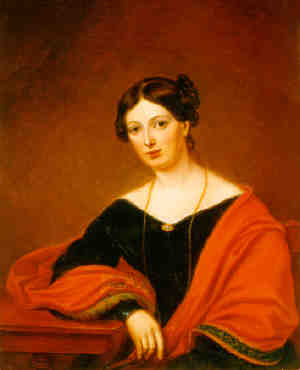
34 F ii. Mary
Theresa Johnson was born on 23 Jun 1815 in Great Torrington, Devon,
was baptized on 29 Jul 1815 in St Michael And All Angels Church, Great
Torrington, Devon, 136
died on 19 Nov 1873 at age 58, and was buried in Sutton Parish Church,
Sutton, Suffolk. The cause of her death was meningitis.
General Notes: In the story of the
Johnsons, Mary does not seem to have been given the prominence that is
due to her, yet, in all probability, her achievements will survive in
the general consciousness every bit as well as those of her brother
William. She was an early settler in the pioneering days of New South
Wales, a writer, a fine illustrator and painter, a translator, a
"Dame", in all but name, of an Eton house and, last but not least, a
mother of seven children.
It was probably due to her writing that some of the fortune lost in
her and Francis's unsuccessful four years in Australia was recouped.
Certainly, it was her connections with Eton (her brother William
Johnson, later Cory, was an assistant master there and also ran a
college boarding house) which enabled Francis to take over that
boarding house from William in 1851 and establish the "Vidal" house in
Old Christophers, in Eton High Street, which was to survive for 30
years, being run latterly by their eldest son, Furse, who took it on
from 1865. Moreover, she brought to that part of the Vidal family the
artistic and commercial talents (the latter seemingly being
singularly absent) of the Johnsons and their forebears that later
manifested
themselves in her children and grandchildren. Above all else, she seems
to have had a formidable energy and determination despite suffering,
grievously,
from Tic Douloureux for many years (see Medical Notes).
Mary will be best remembered for her novels, particularly her first,
"Tales for the Bush", which was published in Sydney by D. L. Welch in
1844 in a series of eight, sixpenny monthly parts and which established
her as one of the first women novelists in Australia to be published.
She later went on to write ten other novels, some set in Australia and
some in provincial England, of which the best known is, probably,
"Bengala:, or Some Time Ago" which was published in London in 1860 by
John W. Parker and Son. How these novels were received when they were
first published in England is not known but "Bengala" was moderately
well received in Australia in its time. Literary critics and historians
of later years have not always been enthusiastic about her work but it
is difficult to make a proper judgment 150 years on when tastes and
mores have changed. Nevertheless, "Bengala", which was republished in
Australia in 1990, still entertains in the year 2000, though its pace
is, probably, a little too gentle for modern tastes.
Mary's biography in the Australian Dictionary of Biography, though it
contains many factual errors, gives a good account of her work as a
novelist and concludes: "To the student of Australian literature her
works are of interest historically rather than as novels in their own
right."
In 1996 the National Library of Australia acquired from the Vidal
family in England, two miniatures of Mary and one of Francis together
with a sketchbook of flower specimens. These have been added to their
collection of memorabilia. The miniatures of Mary and Francis are
believed to have been painted by her and copies of them have been used
to provide the pictures of them in this section.
Of Mary's other achievements, perhaps her and Francis's Australian
venture would appear the most challenging to modern eyes. The long sea
voyage from Plymouth to Sydney with three small children, the oldest of
which was 3½ and the youngest only one month, must have seemed very
daunting even in those days, not to mention, the prospect becoming a
settler in some untamed part of New South Wales. By all accounts,
Mary's parents and family were concerned about the venture, no doubt
not wanting to see her travel so far away and fearful of the hardships
of the journey and the dangers, probably more perceived than real, of
an existence in a penal colony. The voyage home
cannot have been much better, Mary was nearly seven months pregnant
with
her sixth child on their return to Plymouth in June of 1845, and there
were
then five children to care for and amuse during the five months
journey. At least she had the prospect of being reunited with her
family to sustain her and a children's nurse to help her.
Mary's Reynolds heritage showed through in her painting, particularly
her attractive habit of illustrating some subject or other in her
letters. According to her brother, William's, letters, she did
translation work
for London editors on her return from Australia. It is not known what
languages she translated from or into to but in all likelihood they
included French as she and Francis travelled widely in France and sent
Furse and Lily to Paris to further their education.
As for being a "Dame" at Eton in all but name, she initially went there
to help her brother, William, run his boarding house. William, at the
time, was in a unique position of being an assistant master but also
having
responsibility for a boarding house. This dual arrangement was fairly
unusual, Eton Dames and Dominies rarely taught, and William found it
impossible
to carry out both duties satisfactorily, so he persuaded Mary to help
him
run the house. Indeed, for a while, she seems to have been involved in
running two boarding houses because in March 1848 she and Francis
started
a small boarding house in Keate's Lane, just around the corner from Old
Christophers and it was not until 1851 that they gave up that house and
moved
into Old Christophers.
Dames ran most of the boarding houses in Eton and it was said that it
was impossible for a man to run one successfully without a wife; hence
William's problems and the reason, perhaps, why there were so few
Dominies. However, Francis, no doubt, made an elegant and impressive
figurehead
while Mary made sure that the domestic, and probably the economic,
arrangements
worked satisfactorily. There are no records of how well Mary and
Francis
succeeded in making a financial success of running Old Christophers,
one
hopes it was better than Furse's efforts who managed to lose money in
all
but three of the first ten years in which he and Lucy ran the "Vidal"
house.
Of Mary's sons, Jack and Wellie inherited her skill of illustration,
Jack being also an outstanding craftsman in silver and Furse a skilled
carver of wood. Leonard became a successful businessman through his
purchase of F.P. Baker & Co on his retirement from the Indian Army.
Of her grandchildren, Faith Compton Mackenzie was a successful writer
as was her brother Christopher Stone and, to a lesser extent, Lois
Chatham (née Vidal).137,138,139,140
Medical Notes: Mary suffered from Tic
Douloureux, otherwise Trigeminal Neuralgia*, after Jack's birth in
1839, episodes of which gradually became worse and more frequent
through the rest of her life and gave her a great deal of pain and
misery. (See Aunt Ellen's letter to Mary's son, Jack, of Sept 7, 1910.
The latter writing about the death of
her sister, Fanny, in 1845 said "...& yr own Mother was not fit for
any
worry - she had acute Tic often...").
She must have been feeling particularly miserable and unwell sometime
in c.1860 when she wrote this letter to her son Jack:-
It was addressed: For Johnny
My dearest Johnny
When this reaches you I should be out of my pain & thro' Jesus X's
sake I shall be at rest.
I wish I cd have seen your dear old face once more but my sufferings
have been so great I can't wish to live. I don't forget you I pray to
God to watch over you & guard you from all Sin & the Devil Seek
God
by prayer & often take Holy Communion it only can help &
strengthen you.
I commend to yr love & care yr poor Father - comfort him all you
can for my sake - Lily too & the younger ones - poor little
motherless Leonard!
We shall meet again I hope where is no more trial or pain.
God bless you
Yr loving Mother
Jack Vidal received this letter in April 1874, after she had died.
He was serving in Barbados at the time.
NOTE
*Trigeminal Neuralgia is a neurological condition of the trigeminal
facial nerve, characterised by paroxysms of flashing, stab-like pain
around
the eyes or over the forehead, around the upper lip, nose and checks or
along the side of the tongue and lower lip, depending on which branch
of
the nerve is affected. Momentary bursts of pain recur in clusters
lasting
many seconds, paroxysmal episodes of pain can last for many hours. 141
Some things about her life:
• Memorial: c.1876, Sutton Parish
Church, Sutton, Suffolk. Mary's life was commemorated in a porch built
for this church in which the following inscription appeared:-
“This Porch was built A.D. 1876 to the Glory of God and the Memory of
Mary Theresa Vidal wife of Francis Vidal, Vicar of this Parish, who was
born June 23rd 1815 and died November 19th 1873.”
Sadly, the porch has been replaced and this inscription has been lost
(1999).
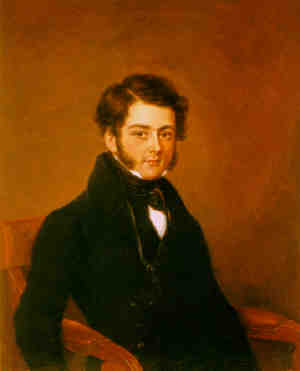
Mary married Revd. Francis Vidal ,98 son of John James Vidal and Elizabeth Wade Allwood , on 25 Apr 1835 in St Michael And All Angels Church, Great Torrington, Devon 142.,143 Francis was born on 26 Nov 1805 in Berkshire Hall, St Thomas In The Vale, Jamaica, 98 was baptized on 15 Feb 1806 in St Thomas In The Vale, Jamaica, 144 died on 20 Jun 1884 in 29 Royal Crescent, Bath, Somerset 145,146 at age 78, and was buried in Sutton Parish Church, Sutton, Suffolk. 147
Marriage Notes: Francis and Mary were
married by Mary's first cousin, the Revd. Joshua Reynolds Johnson, the
vicar of Rattery, Devon.
General Notes: There has been
considerable comment over the years about the lavish lifestyle of the
Vidals in their heyday in Jamaica. However, the extent of their wealth
has probably been much exaggerated.
Francis's father had two estates which were relatively small when
compared with others in Jamaica and, in all likelihood, a significant
part of his income would have come from his professional work as an
attorney and from his various official appointments. One of the
properties, Berkshire Hall, he let go in exchange for an annuity of
£300, the other, St Jago Park Pen, he left to his eldest son, Gale. In
1818 this latter property boasted 19 slaves and 33 head of stock.
Gale kept St Jago Park Pen till he died and even invested in other
estates but the realities were that the fortunes of the planters in
Jamaica had been in decline from the turn of the 18th century. Sugar
prices fell, there was a shortage of labour due to the lack of new
slaves (the slave trade was
prohibited throughout the British Colonies in 1807 and transportation
rigorously
suppressed by the Royal Navy) and by their threatened emancipation
which
eventually came about with the Emancipation Act of 1833.
However, like his father, Gale's income was supplemented first by his
professional work and then by his long appointment as Clerk to the
House of Assembly. There is no doubt that the rapid decline in
Jamaica's prosperity following the emancipation of the slaves there and
the removal of tariff
protection on colonial produce in the British market in 1846, which
reduced
the price of sugar still further, affected Gale as much as any other
plantation
owner, many of whom were forced to close down their sugar plantations.
Francis and his younger brothers, Robert and George, like all younger
sons at that time, only received comparatively small inheritances
(though £2000 was quite a generous sum in 1823) and had to find their
own
way in the world. Francis was not unsuccessful; he married a clever and
industrious women and thanks to her writing and her skillful management
of their Eton College boarding house was able to leave £17,000 when he
died in 1884. 148
Some things about his life:
• Education: ???? & 1818, Camberwell, London. 149 According to Francis's details in the Cambridge University Alumni, he was educated in/at Camberwell before going to Eton. However, the school he attended has not been identified.
• Education: Jan 1819 & Jul 1822, Eton College. 150,151,152 It was later said by his granddaughter, Faith Compton Mackenzie (née Stone), that he had more pocket money than any other boy at Eton at that time. What truth there is in this remark is hard to judge as Faith was rather prone to unsubstantiated statements in her writings about the Vidals. Unfortunately, there is no evidence that Francis distinguished himself in any other way at Eton.
• Occupation: 1823.1827, Jamaica. 153 After leaving Eton, Francis
returned to Jamaica in January 1823 shortly before his father died in
England. There is no record of what he did between that time and his
return to England in 1827 to go up to Caius College, Cambridge.
However, he did take a commission as an Ensign in the St Catherine's
Militia in 1826.
It has been suggested that a decline in the family's fortunes following
the death of Francis's father (see Notes) forced Francis to return to
England and to take holy orders. Like all younger sons whose elder
brothers have inherited the bulk of the family estate, Francis needed
an occupation that produced some income. Presumably, he was not
attracted to the legal profession like his elder brother Gale and his
younger brother Robert and the prospects of being a successful planter
in Jamaica were rapidly diminishing.
Having been educated in England, he would know that being a
schoolmaster or in the Church were regarded there as perfectly
acceptable occupations for younger sons but he needed a degree and to
be ordained before he could embark on either career.
His father had left him £2000 in his Will, which he inherited
on attaining his majority in November 1826, so he was able to use that
money to return to England and fund his undergraduate days at
Cambridge.
• Education: 1827 & 1831, Cambridge. 154 Admitted to Caius College May 31, 1827; Matriculated Michaelmas term 1827; B.A. 1831. Did not take his M.A. until 1863 when he was no doubt thinking about retiring as a Dominie at Eton and becoming an incumbent.
• Ordination: 1831.1832, Various Places. 153,155 Ordained Deacon by the Bishop of Gloucester (for the Bishop of Exeter) at Gloucester and Priest by the Bishop of Exeter at Exeter.
• Occupation: curate, 1832 & 1838,
Various Places. 155 Francis
was appointed to two stipendiary curacies: First, at Roborough (near
Great Torrington) from 25 June 1832 at a yearly stipend of £75 and then
at Ideford (near Newton Abbot) from 30th September 1834 at the same
stipend. He was living at Ideford when he married Mary.
In the spring of 1836, about a year after he was married, he applied
for the post of Chaplain to the Goal & House of Correction &
Sheriff's Ward at Exeter. His reasons for applying for this rather
depressing position can only be guessed at; it may because he needed
more money or because Mary was unhappy in the rather isolated village
community of Ideford. Whatever the reason, he was successful and became
Chaplain from 30th July 1836 and his letter of thanks to the
Magistrates of Devon for selecting him was published in the Exeter
Flyer Post of April 14, 1836.
He resigned in the autumn of 1838. His resignation letter saying that
he was suffering from an "organic affection of the throat" which had
not been amenable to treatment and which " .. rendered my duties as
your Chaplain most painful to me..".
It may be that Francis did indeed have serious throat problems because
they seem to have persisted for some years causing him to lose his
voice from time to time. However, from the accounts of his time there
given by various of his children, it seems likely that he was also
affected by the depressing role that he had to play as Chaplain to the
inmates of the Prison and that he was moved by the stream of minor
offenders who had been sentenced to transportation to the colonies.
• Emigration: 29 Oct 1839, Plymouth,
Devon. 153,156,157,158 Sailed on board the "Earl
Grey" from Plymouth with his wife and three small children bound for
Australia, accompanied by his brother George.
The Vidal party are reputed to have taken with them two maids from
Great Torrington and a couple of New Forest Hounds (a cross between
blood and stag hounds). Arthur Manning's account of the voyage makes
mention also of a manservant and confirms that Mary had servants with
her.
Arrived at Sydney on 25th February 1840 after a voyage of 3 months and
27 days. A voyage not without its tensions, tragedies and drama, which,
no doubt, was typical of long sea voyages at that time.
A passenger died in Cape Town leaving a pregnant widow and two small
children; George and one or two other young, unmarried, men upset other
cabin passengers by holding evening "tea parties" at which they played
cards
and were suspected of drinking; George got involved in a contretemps
with
another passenger, Lewis Whitaker, over a piece written by George in a
newspaper, produced onboard, which threatened to lead to a duel.
It is unclear what brought about Francis's decision to emigrate to
Australia. Certainly, he had been unhappy as Chaplain at Exeter Gaol
and perhaps Mary had not settled well in Ideford or Stokeland (Exeter)
and the opportunity for a new start in a burgeoning colony was,
therefore, attractive. The more so because free passages were being
offered to clergy to encourage them
to emigrate to Australia. It seems very likely that Francis availed
himself of that offer though, presumably, George had to pay his own
passage.
His cousin, the Revd. Robert Allwood, had been induced by the Bishop of
Sydney to go to Australia earlier in 1839 and maybe his enthusiasm and
the idea of carrying the Church's message to distant parts persuaded
Francis and his brother, George, to embark on this adventure.
George, who had just left Cambridge, was unencumbered but for Francis
the decision must have been hard. Mary's parents are said to have been
very much against the idea and are supposed to have extracted the
promise
from Francis that he would bring the family home within five years
(some
accounts say seven). In the event he did return within five years and
eight
months but whether that was because of a promise to the Johnson
parents,
or because the venture had not worked out as he had hoped (see later),
is
not known.
• Occupation: 1840.1845, New South
Wales, Australia. 155,159,160,161,162
Francis served for a short time between August 1840 and March 1841 as
the incumbent at the Church of St Mary Magdalene , South Creek , near
Sydney. Then, according to the SPG archives, he was sponsored by them
to work in the Port Philip district (later the Melbourne area) which he
did for some time in 1841 following in his cousin, Robert Allwood's,
footsteps.
According to the "Blue Books" Francis was appointed as incumbent to
the parish of St Stephens, Penrith in 1841 and later, in June 1844, to
the parish of Denham Court, Liverpool where he stayed until he and the
family returned to England in Jan 1845. He may have been responsible
for
the Port Philip district while he was the incumbent of St Stephen's,
Penrith.
It is by no means sure that Francis remained the incumbent at St.
Stephens until he took up the appointed at Denham Court. The family
appears to have been living in Balmain, not far from the centre of
Sydney, in 1843, when Wellie was born and there is a view that
Francis's pastoral duties in 1842 were limited to the occasional
service in his brother's parish and ceased altogether when the family
moved to Balmain.
Francis bought a smallholding of 93 acres in the County of Melbourne,
in the parish of Bourke (Jika Jika south by Yarra river) on the 23rd
September 1840 at a price of £3 per acre. It is difficult to see how
Francis could have farmed this properly himself given that it was quite
some way from most of the parishes in which he was the incumbent, so
most likely, it was leased to someone. It is said to have formed part
of his estate when he died.
Francis was also a trustee for the Savings Bank of N.S.W. in the
Penrith district for a while. This is rather ironic as he (and George)
are reputed to have lost substantial sums of money when the Bank of
Australia failed in 1843.
• Immigration: 17 Jun 1845, Plymouth,
Devon. 161,163 Left Sydney on 22 Jan 1845
on the "Pestonjee Boomanje" barque, under the command of Captain
Binnie, with his wife and five children, together with his brother
George (now a deacon) and arrived back in Plymouth on 17 June; a
journey of 4 months and 26 days.
It is not known what caused the family to return to England. Certainly,
Francis does not seem to have taken enthusiastically to being an
incumbent, indeed, in later life he seems to have avoided parochial
duties whenever possible. Also, the depressed economic conditions in
NSW and Francis's
losses when the Bank of Australia failed in 1843 must have all
contributed
to the urge to go home.
• Occupation: Mar 1848-Apr 1865, Eton
College. 139,153,164,165 Francis was an Dominie (the
male equivalent of a Dame who was someone who ran a boarding house for
Eton College) first at a house in Keate's Lane
and then at Old Christopher's in the High Street, which he took over in
c.1851 from his brother-in-law, William Johnson (later Cory).
Faith Compton Mackenzie suggests in "As Much as I Dare" that Francis
took a house in Eton because he wanted his sons to be educated there
but could not afford to pay their board as Oppidans. However, it is
also likely that he went to live in Eton because his wife, Mary, was
there running her
brother's boarding house and because there was an opportunity to make a
reasonable, and not too strenuous a living. Eton Dames and Dominies
(there were very few of the latter) ran their boarding houses
independently of the
College and were paid directly by the boys' parents and it was very
unusual
for them to teach at that time.
The Vidal establishment in Keate's Lane started modestly but grew by
1851 to consist of the Vidal family and about twelve boys. The Old
Christopher's establishment, by contrast, was a good deal larger
consisting of the Vidal family plus William Johnson, who kept some
rooms on the ground floor where he lived and taught, and 21 or so boys
not mention the seven servants, including a butler, who were needed to
run the house.
Francis handed over Old Christopher's to his son, Furse, when the
latter got married in April 1865. Mary had not been well for a number
of years (her tic douloureux had been getting worse year by year) and,
no doubt, the
running of Old Christopher's was becoming quite a burden. Furse's
acquisition of a wife (a vital necessity for someone running a school
boarding house) provided an ideal opportunity, therefore, for some
other member of the family to take over the running of the "Vidal"
house.
• Occupation: Aug 1866-Jul 1867, Beachley, Gloucestershire. 153 Priest-in-charge
• Occupation: 1872.1884, Sutton,
Woodbridge, Suffolk. 155
Francis took the living at this parish, which was in the gift of Eton
College, and became Vicar there with his son, Wellie, as his curate. He
does not seem to have spent all of this period actually in the parish.
While Mary was alive, they travelled widely in Europe seeking a cure or
respite from Mary's Tic Douloureux and other ailments and, when Mary's
health permitted, enjoying the delights of the countryside and culture.
Later in the 1870's, Francis is reputed to have had a stroke which
affected his right side (his writing in a letter to his son Jack in
c.1877 giving his blessing to Jack's engagement confirms this) and left
the parish totally in his son's care, at least until 1881, whilst he
lived in Brighton. So we find Wellie describing himself as "Curate in
charge" in the 1881 Census.
How Francis ensured that the parochial duties were carried out when
Wellie moved to Bayford in Hertfordshire in 1881 is unclear. Perhaps,
another curate looked after the parish.
• Will: 3 Dec 1881. 166 Francis made a short Will
and one which is interesting because he distributed his estate amongst
his children in accordance with their needs as he saw them.
The Will read as follows:-
I The Reverend Francis Vidal vicar of Sutton in the County of Suffolk
hereby revoke all Wills and other testamentary dispositions made by me
and declare this to be my last Will and testament I bequeath the
following
legacies free of duty To my son Charles the sum of five hundred pounds
To my son John the sum of three thousand pounds To my daughter
Elizabeth
Teresa the Wife of the Reverend Edward Daniel Stone the sum of two
thousand
pounds and to each of my sons The Reverend Robert Wellington Vidal
George
Vidal and Leonard Vidal the sum of five hundred pounds I devise and
bequeath
all the residue of my property real and personal including estates
vested
in me as trustee or mortgagee to my son Francis Furse Vidal absolutely
and
appoint him sole Executor of this my Will and I declare that in
bequeathing
the foregoing legacies of unequal amount instead of dividing my
property
between my children equally I have taken into consideration the
different
pecuniary circumstances and prospects of my several children with the
view
of making as far as possible a fair and equitable division of my
property
between them In witness whereof I do hereunto set my hand this third
day
of December 1881 — Francis Vidal
Francis Furse Vidal, his eldest son, received approximately £10,000
from his father's estate.
• Probate Granted: 26 Jul 1884, London,
England. 167 Personal Estate
£17,055 9s.
![Sarah (350 KB)
1893
The original of this photograph, which taken in Eton, is inscribed: "For dear Jack and Julie [Vidal] with much love from L."
(Click on Picture to View Full Size)](/Webpics/sljohns.jpg)
35 F iii. Sarah
Elizabeth Johnson was born on 15 Feb 1817 in Great Torrington,
Devon, 153 was
baptized on 27 Mar 1817 in St Michael And All Angels Church, Great
Torrington, Devon, 168
and died on 1 Oct 1902 in Burridge, Sunningdale, Berkshire 169 at age 85.
Some things about her life:
• Probate Granted: 28 Oct 1902, London, England. 170 Effects: £2585 9s 3d
36 F iv. Fanny
Sophia Johnson 22 was born
in 1819 in Great Torrington, Devon, was baptized on 15 Mar 1819 in St
Michael And All Angels Church, Great Torrington, Devon, 171 died on 7 Sep 1845 in
Alpha Road, St John's Wood, Middlesex 172,173 at age 26, and was
buried on 14 Sep 1845 in St Michael And All Angels Church, Great
Torrington, Devon. 174
+ 37 M v. Ven. Charles Wellington Furse 97,98,175 was born on 16 Apr 1821 in
Great Torrington, Devon, 176
was baptized on 22 Jun 1821 in St Michael And All Angels Church, Great
Torrington, Devon, 177
died on 2 Aug 1900 in 1 Abbey Garden, Westminster, London 178 at age 79, and was
buried on 4 Aug 1900 in Westminster Abbey, London. 179
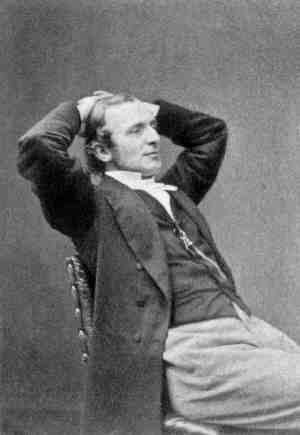
38 M vi. William
Cory was born on 9 Jan 1823 in Great Torrington, Devon, 181 was baptized on 27 Mar
1823
in St Michael And All Angels Church, Great Torrington, Devon, 182 and died on 11 Jun
1892 in 4 Rosslyn Villas, Pilgrims Lane, Hampstead, Middlesex 183 at age 69. Another
name for William was William Johnson.
General Notes: Alumni Cantabrigienses -
Part II
1751 to 1886
JOHNSON [post CORY], WILLIAM. Adm. at KING'S, a scholar from Eton, Feb.
24, 1842. [2nd] s. of Charles [William], of Torrington, Devon
[connected with Sir Joshua Reynolds]. B. there Jan. 9, 1823. Matric.
Easter, 1842;
Chancellor's English medal, 1843; Craven Scholar, 1844; Camden medal
1844;
B.A. 1846; M.A. 1849; Fellow, 1845-72. Assistant Master at Eton,
1845-72,
where Lord Rosebery was one of his pupils. ' He will long be remembered
as the most brilliant Eton tutor of his day' (G. W. Prothero, 'Memoir
of
Henry Bradshaw'). Took a leading part in the throwing open of King's,
1861-5,
and contributed generously towards the creation of a fund for
Exhibitions
in Natural Sciences. Assumed the name of Cory, by deed poll, Oct. 17,
1872.
Two years after inheriting an estate at Haldon, Devon, he resigned his
fellowship of King's, and retired from Eton. Went to Madeira for the
sake
of his health and married there, in 1878, Rosa Caroline, dau. of the
Rev.
George de Carteret Guille, R. of Little Torrington, Devon, and had
issue,
a son. Returned to England, 1882, and resided in Hampstead, where he
gave
'oral classical instruction' to ladies 'for his own sake as well as
theirs.' Very short-sighted, he is said to have pursued a hen down
Windsor Hill,
under the belief she was his own lost hat. Died June 11, 1892, at 4,
Pilgrim's
lane, Hampstead. Author, Poems (Latin and Greek verse), 'A Guide to
Modern
English History from 1815 to 1835'. A volume of extracts from his
letters
and journals was published by the Oxford University Press in 1897.
(King's
Coll. Adm. Reg.; H. S. Salt, 'Memories of Bygone Eton,' Chap. xiv.) 184
Some things about his life:
• Probate Granted: 9 Aug 1892, London,
England. 185 Effects: £10410
6s 10d
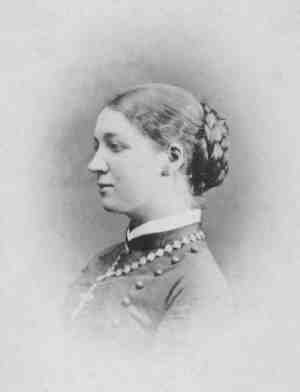
William married Rosa Caroline Guille , daughter of Revd. George De Carteret Guille and Sophia Stevens , on 1 Aug 1878 in Madeira 97.,98 Rosa was born on 31 Jan 1857. 186
39 F vii. Ellen
Furse Johnson 22 was born
in Dec 1826 in Great Torrington, Devon, 22,187 was baptized on 9 Jan
1827
in St Michael And All Angels Church, Great Torrington, Devon, 188 and died on 14 Jun
1912 22 at age
85.
Some things about her life:
• Probate Granted: 14 Jun 1912. 190 Effects: £178 2s. 11d.
Ellen married Major Charles Johnson Anthony Deane , son of Anthony William Johnson Deane and Sarah Elizabeth Stable , in 1853 in St George's, Hanover Square, London.191 Charles was born in 1823 in Webbery, Alverdiscott, Devon 50,187 and died on 17 Oct 1881 in 9 Bouverie Square, Folkestone 97 at age 58.
Some things about his life:
• Probate Granted: 29 Nov 1881, London, England. 192 Personal Estate: £400 19s. 5d.
40 F viii. Elizabeth
Reynolds Johnson 22 was
born in 1829 in Great Torrington, Devon, was baptized on 5 Apr 1829 in
St Michael And All Angels Church, Great Torrington, Devon, 193 died on 6 Nov 1834 in
Great Torrington, Devon 22
at age 5, and was buried on 12 Nov 1834 in St Michael And All Angels
Church, Great Torrington, Devon. 194
29. Elizabeth
Furse 22,106 was baptized on 1 Feb 1793
in St Edmund's Church, Dolton, Devon 107
and died on 8 Jun 1876 in
Westhayes, Rockbourne, Fordingbridge, Hampshire 1,108
at age 83.
Some things about her life:
• Grant of Administration: 26 Jul 1876, London. 195 Effects under £3,000.
Elizabeth married Revd. William Johnson Yonge ,22 son of Rev. Chancellor William Yonge and Frances Johnson , <1825>. William was born on 15 Oct 1785 in Great Torrington, Devon, 196 was baptized on 20 Dec 1785, 196 and died on 2 May 1875 in Rockbourne, Fordingbridge, Hampshire 196,197,198 at age 89.
General Notes: Fellow of King's College,
Cambridge. Rector of Rockbourne, Hants., for 51 years. Sometime Rural
Dean and J.P. for the county of Hants.
Alumni Cantabrigienses says this of William:-
YONGE, WILLIAM JOHNSON. Adm. at KING'S, a scholar from Eton, Dec. 15,
1804. S. of the Rev. William (above) (and Frances). [B. Oct. 15, 1785,
at Torrington, Devon.] Bapt. Dec. 20, 1785. Matric. Michs. 1804; B.A.
1809; M.A. 1815. Fellow, 1807-24. Ord. deacon (Norwich), Dec. 18, 1808;
priest July 8, 1810. P.C. of Rockbourne, Hants., 1824-75. Married
Elizabeth, 2nd dau. of the Rev. Wellington Furse, of Halsdon, Devon.
Died May 2,1875.
("Clergy Lists"; "Crockford"; "King's Coll. Reg."; Burke, "L.G." sub
Furse;
Sir W. Sterry.) 199,200
Some things about his life:
• Probate Granted: 28 May 1875, London. 201 Effects under £4000
Children from this marriage were:
41 F i. Frances
Johnson Yonge 202 was
born in 1825 in Great Torrington, Devon, 203
was baptized on 13 Jul 1825 in St Michael And All Angels Church, Great
Torrington, Devon, 204
and died on 22 Dec 1902 in 39 Cambridge Terrace, Hyde Park, London
205 at age 77.
Some things about her life:
• Probate Granted: 26 Mar 1903, London. 206 Effects: £3400 15s 9d
Fanny married John Alexander Radcliffe ,202 son of Revd. George Radcliffe D.D. and Unknown , on 26 Apr 1848.207 John was born <1822> in Salisbury, Wiltshire 203 and died on 27 Jan 1891 in 39 Cambridge Terrace, Hyde Park, London 208 at age 69.
General Notes: Somtime a solicitor in London (Westminster)
Some things about his life:
• Probate Granted: 7 Mar 1891, London. 209 Personal Estate: £31,945 18s
3d.
Resworn May 1892: £34,421 12s 5d.
Resworn May 1898: £35,921 12s 5d.
42 M ii. Revd.
William Wellingon Yonge 210
was born <1828>, 210
was baptized on 17 Apr 1828 in Rockbourne, Fordingbridge, Hampshire,
211 and died on 28 Feb
1878 in White Waltham, Berkshire 210,212 at age 50.
General Notes: Yonge, William Wellington, o.s. William Johnson, of Rockbourne, Hants, cler. EXETER COLL., matric. 3 Feb., 1848, aged 19; B.A. 1851, rector of Shottsbrooke and vicar of White Waltham, Berks, 1857 until his death 28 Sep., 1878. See Foster's "Our Noble and Gentle Families", II, 817; & Eton School List. 210
Some things about his life:
• Grant of Administration: 15 Mar 1878, London. 213 Personal Estate under £4,000.
43 F iii. Mary
Agnes Reynolds Yonge 207
was born <1830>, was baptized on 20 Aug 1830 in Rockbourne,
Fordingbridge, Hampshire, 211
and died on 23 Jan 1914 214
at age 84.
Some things about her life:
• Probate Granted: 14 Feb 1914, London. 215 Effects: £8001 14s 3d.
44 F iv. Elizabeth
Deane Yonge 207 was born
<1832>, was baptized on 13 Feb 1832 in Rockbourne, Fordingbridge,
Hampshire, 211 and
died on 12 May
1918 in Rockbourne, Fordingbridge, Hampshire 216 at age 86.
Some things about her life:
• Probate Granted: 11 Jul 1918, London. 217 Effects: £8237 12s 3d
45 F v. Theresa
Jane Yonge 207 was born
<1833>, was baptized on 6 Dec 1833 in Rockbourne, Fordingbridge,
Hampshire, 211 and
died on 6 Jan 1900 in Westhayes, Rockbourne, Fordingbridge, Hampshire
218 at age 67.
Some things about her life:
• Probate Granted: 15 Feb 1900, London. 219 Effects: £8451 9s 1d
30. John Henry
Furse 220 was
baptized on 13 Sep 1794
in St Edmund's Church, Dolton, Devon, 221
died on 1 Aug 1854 in Halsdon, Dolton, Devon 75,111
at age 59, and was buried on 8 Aug 1854 in St Edmund's Church, Dolton,
Devon.
112,113
General Notes: After an education at Eton
and Exeter College, Oxford, where he took his BA in 1816, John seems to
have lived out the rest of his life as a country gentlemen at Halsdon
and, unlike his father, he took little interest in the civic affairs of
Great Torrington.
Some things about his life:
• Will signed: 9 Mar 1848. 222 John left his illegitimate
daughter Mary Wren an annuity of £50 for life provided she did not
marry before the age of 28; he also left her £1000 subject to the same
condition. About six years later, he added a Codicil to that Will and
gave Mary (now call Mary Furse) a further £5000, subject again to her
not marrying before the age of 28. In this Codicil he also left his
wife Anna sum of £100 and declared that that sum was to "be in lieu
of and in full satisfaction for all dower thirds & which my said
wife might otherwise claim or be entitled to out of my real estate".
John did not made any bequests in connection with any land that he may
have owned, that may have been because he was only a life tenant of the
Halsdon Estate and had no need to specify his successor or because, in
the absence of an heir, he chose to overlook the matter.
The two Trustees and Executors that John appointed to carry his Will
into effect did not, in the event, do so as they both renounced their
roles, doubtless, because of its controversial content.
• Grant of Administration: London. 223,224
On the 15th day of January 1855 Admon (with the Will and Codicil
annexed) of the Goods Chattels and Credits of John Henry Furse late of
Halsdon in the parish of Dolton in the County of Devon Esqre
deceased was granted to Elizabeth Yonge (wife of the Revd
William Johnson Yonge Clerk) the natural and lawful sister and the only
next of kin having been first sworn by Canon duly to administer... John
Stoley and William Evan
in the Will written William Price Esquires the executors named in the
said
Will having renounced the probate and execution of the said Will and
Codicil. No residuary legatee named in the said Will. Anna Sophia Furse
Widow the Relict having renounced the Letters of Admon (with the said
Will and Codicil annexed) of the goods the said deceased (as by Acts of
Court appears)
From the Legacy Duty records, it appears that John's estate was valued
at £20,000 but whether or not this included the Halsdon Estate is not
clear. Half of that sum went to John's widow Anna and the remainder to
John's sister Elizabeth Yonge. Elizabeth Yonge, as administrator,
having set aside the £50 annuity and the bequests amounting to £6000
which were supposed to be paid to John's illegitimate daughter Mary
Furse and having ignored his wishes concerning his wife (see his Will).
The Halsdon Estate then passed into the hands of John's nephew Charles
Wellington Johnson who had the previous year changed his surname to
Furse. It may be that in order to inherit the Halsdon Estate he needed
to make such a change or it may be that Wellington knew that in order
to inherit from his granduncle, Philip Furse, he would have to take on
the Furse name and Arms and chose to do so then. (See Philip Furse's
Will for details).
John married Anna Sophia Buller ,22 daughter of Revd. Richard Buller and Anna Sophia Marshall , on 18 Jun 1831 in Saint Peter's Cathedral, Exeter, Devon.114 Anna was born on 26 Oct 1801, was baptized on 20 Apr 1802 in Colyton, Devon, 225 and died on 9 Oct 1872 in Surrenden Dering, Pluckley, Ashford, Kent 226,227 at age 70.
Marriage Notes: John and Anna probably met
through John's uncle, Peter Furse, whose third wife, Elizabeth
Marshall, was Anna's aunt.
It does not seem to have been a happy marriage. Anna was unable to
bear John any children and there was, therefore, little to hold them
together as the years went on. Doubtless, John's affair with Liza
Hookway, which may have been one of many such liaisons, and his wish to
recognise Liza's child by him, was both a symptom and a cause of the
deepening rift between him
and Anna.
So it is not surprising that by 1851 Anna had left John and was living
in the village of Uley, near Dursley, with her own establishment and,
as she continued to live there after he died (but in rather more
style), the conclusion must be that she had parted from him permanently
by 1851; this is no doubt why John, when he added a Codicil to his Will
of 1848 in 1854, specifically set aside all other provisions for Anna
and left her only a modest £100. (See note about his Will).
After John's death, Anna was given an absolute interest in half his
estate which was a generous arrangement born, perhaps, out of Furse
family
unhappiness with how she had been treated. Anna did not return any of
her legacy to the Furse side of the family, choosing instead to spread
it
amongst her own nieces and nephews. 228,229
General Notes: Not unsurprisingly perhaps,
Anna seems to have become a rather sad and reclusive figure in her
later years if the preamble to her Will is any guide. It reads: "...I
desire that I may be buried in the churchyard or cemetery of the parish
or town in which I die as privately and with as little expense as may
be and without any notification of the place of my burial...".
In the event, Anna died at Surrenden Dering, a house lent to
her by Sir Edward Dering near the village of Pluckley in Kent where, in
all probability, she is buried in the churchyard. She left Sir Edward
all
the furniture, books and household effects that she had brought to
Surrenden
Dering in recompense for his kindness. 229
Some things about her life:
• Will signed: 21 Jun 1871. 229 Sophia disposed of her not insubstantial estate to no fewer than 23 relatives, all cousins on her father's or mother's side.
• Probate Granted: 5 Dec 1872, Canterbury, Kent. 230 Effects under £18,000
John had a relationship with Eliza
Hookway .
Their child was:
46 F i. Mary
Furse . Another name for Mary was Mary Wren. (Illegitimate)
Sixth
Generation 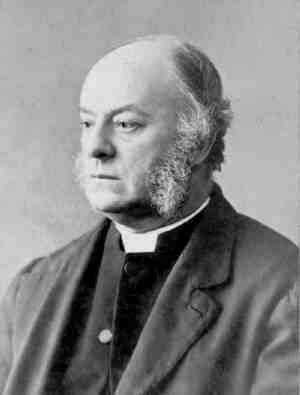
37. Ven.
Charles Wellington Furse 97,98,231
was born on 16 Apr 1821 in Great Torrington, Devon, 176 was baptized on 22 Jun
1821
in St Michael And All Angels Church, Great Torrington, Devon, 177 died on 2 Aug 1900 in
1 Abbey Garden, Westminster, London 178
at age 79, and was buried on 4 Aug 1900 in Westminster Abbey, London.
179 Another name for
Wellington was Ven. Charles Wellington Johnson.
General Notes: Wellington's entry in WHO
WAS WHO for 1897-1915 is as follows:-
FURSE, Ven. Charles Wellington, MA, JP; Archdeacon of Westminster from
1894; Canon of Westminster, 1883; Rector of St John Evangelist,
Westminster, 1883-94; b. 1821; s of C. W. Johnson, Torrington, and d of
Rev. P. Wellington Furse, Halsdon; assumed surname Furse in 1854; m
1st, Jane Diana (d 1877), d Rev. J. S. B. Monsell; ten c; 2nd Gertrude,
d of Henry Barnet. Educ.: Eton; Balliol College, Oxford. Ordained 1848;
Principal of Cuddesdon Theological College 1873-83; hon. canon of
Christ Church, 1873. Publications: Sermons, Helps to Holiness, The
Parish Church and the Parish Priest. Address: Halsdon House, North
Devon; 1 Abbey Garden, Westminster. Died 2 Aug. 1900. 232
Some things about his life:
• Obituary: 3 Aug 1900, London, England. 233
The Venerable Charles Wellington Furse,
who died at his residence in Abbey-gardens yesterday morning, was the
senior in age of the canons of Westminster, and second only to the
sub-dean, Canon Duckworth, in length of service on the chapter. He was
born in 1821, his
father being Mr. Charles William Johnson, of Great Torrington, Devon,
and
his mother, Theresa, daughter of the Rev. Peter Wellington Furse, of
Halsdon,
North Devon. On the death of his father in 1854 Mr. Furse assumed the
name
by which he has since been known. Etonians will think of him in
connexion
with Johnson, the Eton master, whose journal, printed privately, has
revealed
to his friends the extreme conscientiousness which he strove with the
difficulties
and misunderstandings of such work as his.
Mr. Furse was educated at Eton and Balliol College, where he took his
B.A. degree in 1847, but without distinction in the schools, and was
ordained in 1848 by Bishop Samuel Wilberforce, whose son afterwards
succeeded him at St. John's, Westminster. After serving curacies at
Clewer and Christ Church, Albany-street, Mr. Furse was appointed by the
Lord Chancellor to the vicarage of Staines, where he remained from 1863
to 1873. He had been appointed in 1870 chaplain to Bishop Mackarness,
an office which he held till the Bishop's death in 1888. In 1873, on
the Bishop's nomination, he became vicar of
Cuddesdon and rural dean, being the at the same time, according to
custom,
principal of Cuddesdon College. The ten years of his headship of the
college
were perhaps the most important of his life; no man can hold that
office
without exercising a considerable influence of some sort on the Church
at
large. In 1883 he received from the Crown the residentiary canory in
Westminster
Abbey which carries with it the charge of the parish of St. John,
Westminster,
and in 1894, exchanged this stall for one to which no parochial duties
attached. In 1895 Bishop Temple nominated him to succeed Dr. Farrar as
Archdeacon
of Westminster. Canon Furse, who owned property in North Devon, and was
on the commission of the peace for that county, was twice married.
Among
his sons is Mr. C. W. Furse, the well-known painter. The Archdeacon,
who
perhaps never made any considerable mark as a preacher at the Abbey,
had
for some time been unable to perform his residentiary duties and there
had
been some question of his resigning his Archdeaconry. He was the author
of a volume of sermons entitled "Helps to Holiness" and of "The Parish
Church and the Parish Priest." The funeral will take place at
Westminster
Abbey to-morrow at 12.30.
• Funeral: 4 Aug 1900, London, England. 179 The Times, Monday, August
6th 1900
The funeral of Archdeacon Furse took place at Westminster Abbey on
Saturday. The coffin was received at the Cloister entrance by Canon
Duckworth, the Sub-Dean, Canon Wilberforce, Canon Gore, the Rev. H. G.
Daniell-Bainbridge, the Precentor, and the minor canons. A procession,
headed by the choir and the clergy, was formed into the Abbey, where
the first part of the service was conducted by the Sub-Dean and Canon
Gore. After the lesson, the hymn "Let Saints on Earth in Concert Sing"
was sung and Chopin's "Funeral March" played by the organist while the
body was being borne to the grave in the East Cloister. The remainder
of the service at the graveside, was conducted by Canon Gore and the
Precentor, the concluding hymn being "Praise to the Holiest in the
height" (Cardinal Newman).
The principal mourners were Mrs Furse (widow), Mr. J. H. M. Furse, Mr.
C. W. Furse, the Rev. M. B. Furse, and the Rev. H. R. Furse (sons), Mr
Ralph Furse (grandson), the Rev. J. P. and Mrs. Maud, the Rev. C. T.
and Mrs.
Abraham, Miss Furse, Miss Katherine Furse, Mrs. W. T. Furse, Mrs. Ward,
Lieut-Colonel Monsell, and Rev. Herbert Barnett. Those present included
the Rev. Furse Vidal, Mr H. Evans Gordon, Sir William Vincent, Mr J. G.
Talbot, M.P., the Rev. F. and Mrs. Gurdon, Mr. John Thynne
(Receiver-General to the Dean and Chapter), Mr. Arthur Mackarness, Mr
Luxmoore, and Mr Thomas Bond.
• Probate Granted: 4 Sep 1900, London,
England. 234 Effects: £19594
4s 6d. Resworn Jan 1902 £20246-7-11 and £20297-12- 4.
Wellington married Jane Diana Monsell ,97,98 daughter of Revd. Dr. John Samuel Bewley Monsell LL.D and Unknown , on 24 Feb 1859 in St Boniface, Bonchurch, Iow 97.,98 Jane was born <1837> in County Derry, Ireland and died on 20 Mar 1877 in Cuddesdon, Oxfordshire 235 at age 40.
Some things about her life:
• Grant of Administration: 6 Dec 1885,
London, England. 236 Personal
Estate £1,000
Children from this marriage were:
+ 47 M i. John Henry Monsell Furse 22,237
was born in 1860, 22,238 was baptized on 6 Mar
1860
in Egham, Surrey, 50
and died on 5 Apr 1950 1,239 at age 90.
48 M ii. Charles
Cyril Furse 22,242 was born on 19 Jun 1861
22,242
and died on 21 Mar 1862 22,242 .
+ 49 F iii. Elizabeth Diana Furse 22 was born in 1862 in St
Pancras, Middlesex
243,244 and died on 7 Feb
1939 245 at age
77.
+ 50 F iv. Mary Theresa Furse 22 was born in 1863 in Staines,
Middlesex 243,244 and died on 7 Apr
1952 242 at age
89.
+ 51 M v. Lieut. General Sir William Thomas Furse K.C.B.,
K.C.M.G., D.S.O. 22
was born on 21 Apr 1865 in Staines, Middlesex, 22,244
died on 31 May 1953 1,246 at age 88, and was
buried in All Saints Church, Cuddesdon, Oxon. 247
+ 52 M vi. Charles Wellington Furse A.R.A. 22 was born on 13 Jan 1868 in
Staines, Middlesex 22,244 and died on 16 Oct
1904 248 at age
36.
+ 53 F vii. Margaret Walter Furse 22 was born <1869> 243 and died on 26 Jun
1963 242 at age
94.
+ 54 M viii. Rt. Revd. Michael Bolton Furse K.C.M.G., D.D.
22 was born on 12 Oct 1870 in
Staines, Middlesex 244,250 and died on 18 Jun
1955 1,251 at age 84.
+ 55 F ix. Edith Furse 22
was born in 1874 243
and died on 14 Dec 1960 242
at age 86.
56 M x. John
Monsell Furse 22 was born
on 12 Mar 1877 22
and
died on 28 Feb 1888 242
at age 10.
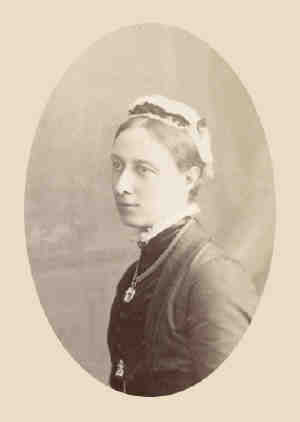
Wellington Wellington never married. Gertrude Louisa Barnett ,242 daughter of Colonel Henry Barnett and Emily Ann Stratton , on 7 Jan 1880 in Glympton Parish Church, Oxon 97.,180 Gertrude was born on 2 Apr 1848 in London 254 and died on 6 Mar 1912 in Markham House, Wokingham 242,255 at age 63.
Some things about her life:
• Probate Granted: 1 May 1912, London,
England. 256 Effects: £5182
18s 6d
Children from this marriage were:
57 F i. Katherine
Emily Furse 1 was born on
21 Feb 1881 1 and
died on 8 Jul 1911 in Halsdon, Dolton, Devon 1 at age 30.
Some things about her life:
• Probate Granted: 29 Aug 1911, London, England. 257 Effects: £2580 7s 4d
58 M ii. Lt.
Col.
Herbert Reynolds Furse M.B.E. 1,114 was born on 31 Jan 1887
1 and died on 25 Feb 1956
1 at age 69.
Some things about his life:
• Grant of Administration: 28 Mar 1956, London, England. 258 Effects: £262 4s
Herbert married Catherine Ann
Carlisle , daughter of John Carlisle and Unknown
, on 28 Mar 1953.1
Seventh
Generation 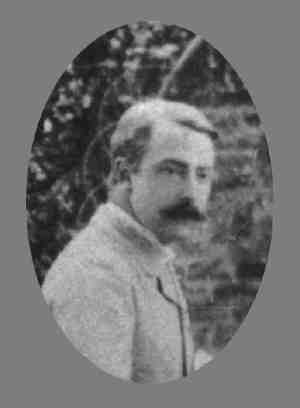
47. John Henry
Monsell
Furse 22,259 was born in 1860, 22,238
was baptized on 6 Mar 1860 in Egham, Surrey, 50 and died on 5 Apr 1950
1,239
at age 90.
Some things about his life:
• Early training: From 1881 to 1887, British Museum, London. 260 After leaving Oxford, Harry went to work at the British Museum. What he did there has not been discovered but it seems to have developed his interest in sculpture.
• Artistic Endeavour: 1881 onwards, Various Places. 261 Harry had a considerable flair for sculpture and probably during his time at the British Museum and, certainly later, he executed many excellent works of sculpture and undertook several commissions. A statue of the Rev. Dr William Miller and the busts of Mrs Edward O'Brien & Mrs David Henderson have been mentioned in this regard, to which should certainly be added the busts of Margaret Newbolt & her daughter Celia. He also executed several medal groups and bas-reliefs of animals.
• Probate Granted: 15 Jun 1950, London,
England. 262 Effects: £31116
11s 2d
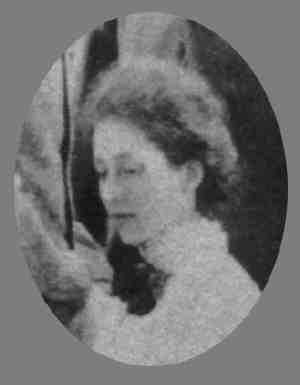
Harry married Ethel Dolignon , daughter of Revd. John William Dolignon and Emily Augusta Reynolds Montagu , on 16 Dec 1886 in Westminster Abbey, London 1.,241 Ethel was born in 1856 in Paddington, Middlesex 263,264 and died on 10 Oct 1887 in 8 Gloucester Street, Warwick Square, London 265 at age 31.
Marriage Notes: Harry and Ethel were first
cousins
Some things about her life:
• Grant of Administration: 26 Jan 1888,
London, England. 266 Persona
Estate: £289 3s 2d
The child from this marriage was:
+ 59 M i. Sir Ralph Dolignon Furse K.C.M.G., C.M.G., D.S.O.
1 was born on 29 Sep 1887 in 8
Gloucester Street, Warwick Square, London, 1
died on 1 Oct 1973 267
at age 86, and was buried in St Edmund's Church, Dolton, Devon. 268
Harry next married Evelyn Mary Campbell ,1 daughter of George Campbell and Unknown , on 11 Mar 1922.1 Evelyn was born in 1874 1,270 and died on 18 Mar 1963 in Yeatman Hospital, Sherborne, Dorset 245 at age 89.
Some things about her life:
• Probate Granted: 10 Jul 1963, London, England. 271 Effects: £30,983 12s
49. Elizabeth
Diana Furse 22 was
born in 1862 in St Pancras, Middlesex 243,244 and died on 7 Feb
1939 245 at age
77.
Some things about her life:
• Grant of Administration: 22 Mar 1939, London, England. 272 Effects: £5943 4s 11d
Elizabeth married Rt. Revd. John Thomas Primatt Maud ,243 son of Revd. John Primatt Maud and Unknown , on 8 Jan 1891.242 John was born in 1860 273 and died on 21 Mar 1932 242 at age 72.
General Notes: Sometime Suffragan Bishop of Kensington. 242
Some things about his life:
• Report of death: 24 Mar 1932, London,
England. 274 The Church Times
reported John's death:-
On the 21st inst. The Right Rev. John Primatt Maud, Bishop of
Kensington since 1911, formerly Vicar of St Mary, Redcliffe, Bristol
(1904-11), aged 71.
Children from this marriage were:
60 F i. Jeanie
Monsell Maud 275 was born
in 1891 275 and
died in 1970 275
at age 79.
Jeanie married Rt. Revd. John Norman Bateman-Champain 275 in 1912.275 John died in 1950 275 .
Marriage Notes: John and Jeanie had issue:
2 sons and 2 daughters.
Jeanie next married Sir Foster Robinson .275
61 F ii. Dorothy
Maud 275 was born in 1894
275 and died in
1977 275 at age
83.
62 M iii. Christopher
Maud 275 was born in 1896
275 and died in
1911 275 at age
15.
63 F iv. Eileen
Maud 275 was born in 1899.
275
Eileen married John Grace 275 in 1925.275 John died in 1960 275 .
Marriage Notes: John and Eileen had issue:
2 sons and 3 daughters
64 F v. Molly
Maud 275 was born in 1900.
275
65 M vi. Lord
John Primatt Redcliffe Maud G.C.B., C.B.E. 275 was born on 3 Feb 1906.
275,276
John married Jean Hamilton ,275 daughter of J. B. Hamilton and Unknown , in 1932.275
Marriage Notes: John and Jean had issue: 1
son and 3 daughters
50. Mary
Theresa Furse 22 was
born in 1863 in Staines, Middlesex 243,244 and died on 7 Apr
1952 242 at age
89.
Some things about her life:
• Probate Granted: 27 Jun 1952, London,
England. 277 Effects: £1176
0s 11d
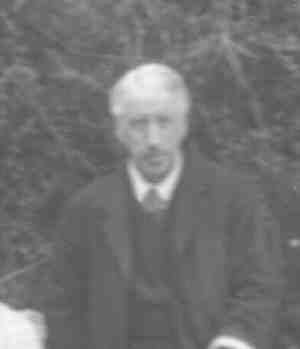
Mary married Rt. Revd. Charles Thomas Abraham ,243 son of Rt. Revd. Charles John Abraham D.D. and Caroline Harriet Palmer , on 24 May 1883.242 Charles was born in 1857 278 and died on 27 Jan 1945 in Upton Noble, Somerset 242 at age 88.
Some things about his life:
• Report of death: 9 Feb 1945, London,
England. 279 The Church Times
gave this notice of Charles's death:-
On Jan 27th. The Right Rev. Charles Thomas Abraham, formerly Bishop
Suffragan of Derby (1909-27) and late Rector of Astbury, Cheshire
(1927-35), aged 87.
On the same page the Church Times printed the following under the title
"IN MEMORIAM"
His many friends heard with great sorrow of the death of the Rt. Rev. C. T. Abraham at Upton Noble in Somerset. A graduate of Keble College, Oxford, the late Bishop was ordained in 1881 to the curacy of St Mary's, Shrewsbury, - appointed vicar of All Saints, Shrewsbury in 1885 and vicar of Christ Church, Lichfield, in 1889. In 1909 he was consecrated Bishop Suffragan of Derby - he resigned in 1927 and about ten years ago he went to live at Upton Noble. All who were privileged to know him will remember his transparent sincerity, his humbleness and generosity of heart and mind.
• Probate Granted: 16 Jun 1945, Llandudno.
280 Effects: £19,551 12s 11d
Children from this marriage were:
66 M i. Charles
Wellington Rupert Abraham 281,282 was born on 23 Jul 1884
282 and died in 1951
281,282
at age 67.
67 M ii. Jasper
Abraham 281,282 was born on 11 Apr 1885
281,282
and died in 1943 281,282 at age 58.
Jasper married Edith Mary Betts 281,282 in 1934. Edith was born in 1912 282 and died in 1995 282 at age 83.
Marriage Notes: Jasper and Mary had issue:
4 daughters
68 F iii. Marjorie
Monsell Abraham 281 was
born on 12 Feb 1888 281,283 and died on 14 Jun
1972 281,283 at age 84.
Marjorie married Revd. Sidney Ernest Swann 281,283 on 8 Aug 1917.281 Robin was born on 24 Jun 1890 283 and died on 19 Sep 1976 281,283 at age 86.
Marriage Notes: Robin and Marjorie had
issue: 1 son and 1 daughter
General Notes: Sometime Chaplain T. H., Archdeacon in Egypt and Canon of Bristol. 283
69 F iv. Mary
Theresa Caroline Abraham 281,282 was born on 13 Mar 1890
281,282
and died in 1978 281,282 at age 88.
Molly married Revd. Arthur Rupert Browne-Wilkinson 281,282 in 1917 in Bakewell, Derbyshire 281.,284 Rupert was born on 6 Aug 1889 282 and died on 7 Apr 1961 in Chichester, Hants. 281,282,285 at age 71.
Marriage Notes: Rupert and Molly had
issue: 1 son and 5 daughters
70 F v. Jeanie
Furse Abraham was born in 1891 in Lichfield 286 and died in 1960 in
Taunton, Somerset 287
at age 69.
+ 71 M vi. Michael Hudson Furse 281,282
was born in 1893. 281
72 M vii. Capt.
Geoffrey William Pepperrell Abraham 281
was born in 1896 in Lichfield, Staffordshire, 281,288
died on 16 Nov 1917 281,289 at age 21, and was
buried in Port Said War Memorial Cemetery, Egypt. 290
73 M viii. Rt.
Revd.
Philip Selwyn Abraham 281,282 was born on 29 Jul 1897 in
Lichfield 281,282,291
and died on 22 Dec 1955 281,282 at age 58.
Philip married Elizabeth Dorothy Cicely Marriott ,281,282,291 daughter of Sir John Marriott and Unknown , on 7 Jun 1923 281.,291 Cicely was born on 10 Apr 1892 282 and died on 1 Sep 1975 281,282 at age 83.
Marriage Notes: Philip and Cicely had
issue: 3 sons and 1 daughter
74 F ix. Katherine
Nona Abraham 281 was born
on 23 May 1901. 281
Katherine married Revd. Alfred Swann 281 in 1923.281 Alfred died in 1961 281 .
Marriage Notes: Alfred and Nona had issue:
2 sons and 2 daughters
75 F x. Delia
Abraham 281,282 was born on 10 Nov 1902
281,282
and died in 1982 282
at age 80.
Delia married Revd. Alan Ecclestone 281,282 in 1934.281 Alan was born on 3 Jun 1904 282 and died on 14 Dec 1992 282 at age 88.
Marriage Notes: Alan and Delta had issue:
3 sons.
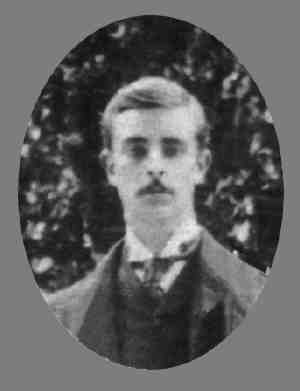
51. Lieut.
General Sir William Thomas Furse K.C.B., K.C.M.G., D.S.O. 22 was born on 21 Apr 1865 in
Staines, Middlesex, 22,244 died on 31 May 1953
1,246
at age 88, and was buried in All Saints Church, Cuddesdon, Oxon. 247
General Notes: William's entry in WHO WAS
WHO for 1951-1960 is as follows:-
FURSE Lieut.-General Sir William T., K.C.B., cr. 1917 (C.B. 1915);
K.C.M.G., cr. 1935; D.S.O. 1900; R.A.; b. 21 Apr. 1865; s. of late Ven.
the Archdeacon of Westminster; m. 1899, Jean Adelaide, 2nd d. of late
H. Evans-Gordon; two s. one d. Educ.: Eton. Entered army, 1884;
Captain, 1893; Major, 1900; Colonel, 1911; A.D.C. to Lord Roberts when
Comm.-in-Chief in India, 1890-93; graduated at Staff College, 1897;
R.A. Headquarters, 1897-1902; D.A.Q.M.G. 2nd Army Corps,, 1902-4; Army
Headquarters, 1905-7; G.S.0. 2nd Grade, Staff College, 1908-11; O.C.
12th Brigade, R.F.A.; G.S.0. 1st Grade, 6th Division, 1913-14;
B.G.G.S., II. Corps, France, 1915; G.C.O. 9th (Scottish) Division,
1915-16; served in S. Africa, 1899-1900 (dispatches, Queen's medal 5
clasps, D.S.O.); European War, 1914-18 (dispatches, K.C.B.; prom.
Maj.-Gen. and Lt.-Gen.); Master-General of Ordinance, 1916; member of
Army Council; retired, 1920; Director of the Imperial Institute,
1926-34. Address: 42 Worminghall, Aylesbury, Bucks. [Died 31 May 1953].
292
Some things about his life:
• Probate Granted: 7 Sep 1953, London,
England. 293 Effects: £517 7s
9d
William married Dame Jean Adelaide Gordon O.B.E. , daughter of Henry Evans Gordon and Mary Theodosia Sartoris , in Apr 1899.1 Jean was born in 1874, 294 died on 23 Jun 1954 in 14 Cheyne Row, Chelsea, London Sw 3 295 at age 80, and was buried in All Saints Church, Cuddesdon, Oxon. 247
Some things about her life:
• Probate Granted: 26 Nov 1954, London,
England. 296 Effects: £3707
2s 10d
Children from this marriage were:
+ 76 M i. David Gordon Roberts Furse 297 was born on 6 Mar 1900
297 and died on 28 May
1955 297 at age
55.
77 M ii. Roger
Kemble Furse 297 was born
on 11 Sep 1903 297
and died on 19 Aug 1972 in Corfu, Greece 298 at age 68.
General Notes: Roger's entry in WHO WAS
WHO for 1971-1980 reads:-
Furse, Roger Kemble, RDI 1949, freelance theatre and film designer;
painter; illustrator; b 11 Sept. 1903; s of late Lieut.-Gen. Sir
William
Furse, KCB, KCMG; m 1936, Alice Margaret (née Watts) (marriage
dissolved, 1951); no c; m Ines Sylvia Perg. Educ: St George's Choir
Sch., Windsor Castle;
Eton; Slade Sch .of Fine Arts. Worked in Paris, 1924-27, in USA,
1927-31
(commercial work, portraits, etc.); returned to London, 1931, since
when
has been designing for Theatre; and later, 1943, for films. [There then
follows a long list of credits (plays and films) culminating in an
entry
for "The Workhouse Donkey" at Chichester Festival Theatre in 1963]
Served War 1939-45; joined Navy 1940; commnd RNVR, 1941. Recreations:
friends. Address: c/o National Westminster Bank Ltd, Tavistock Square,
WC1. [Died 19 Aug. 1972]. 299
Some things about his life:
• Probate Granted: 12 Apr 1973, London, England. 300 Effects in England and Wales: £2045
Roger married Alice Margaret Watts ,297 daughter of Arthur Watts and Unknown , on 4 Dec 1936. The marriage ended in divorce in 1951.
Roger next married Ines Sylvia Perg .
78 F iii. Diana
Furse 297 was born on 26
Mar 1902 297 and
died
on 7 Jul 1931 297
at age 29.
79 F iv. Judith
Furse 297 was born on 4
Mar 1912 297 and
died on 26 Aug 1974 at age 62.
52. Charles
Wellington Furse A.R.A. 22
was born on 13 Jan 1868 in Staines, Middlesex 22,244
and died on 16 Oct 1904 248
at age 36.
General Notes: Charles's entry in WHO WAS
WHO for 1897-1915 is as follows:-
FURSE, Charles Wellington, ARA 1904; painter; b 1868; 3rd s of late
Ven. C. W. Furse, Archdeacon of Westminster, and of Halsdon House, N
Devon; m 1900, Katharine y d of John Addington Symonds of Clifton Hill
House, Bristol; two s. Educ: Haileybury Coll. Studied at the Slade
School under Prof. Legros; Slade Scholarship; afterwards worked in
Paris; gold medal, Munich; member of the New English Art Club.
Recreations: shooting, golf, fishing. Club: Savile. Died 17 Oct. 1904. 232
Some things about his life:
• Obituary: 18 Oct 1904, London, England.
The
Times - October 18, 1904
England has to mourn the loss of one of
her greatest portrait painters in Mr. Charles Wellington Furse, who
died yesterday at the age of thirty-six.
The cause of this sudden snapping of a career of great promise was
asthma supervening upon hæmorrhage, the result of long standing
pulmonary affection aggravated by getting wet while shooting.
Charles Wellington Furse was the third son of the Venerable C. W.
Furse, Archdeacon of Westminster, and of Halsden House, North Devon. He
was educated at Haileybury College, studied at the Slade School under
Professor Legros, won the Slade Scholarship, and afterwards worked in
Paris. He married in 1900 the youngest daughter of Mr. John Addington
Symonds, of Clifton Hill House, Bristol.
It is only a few months since the election of Mr. Furse to the
associateship of the Royal Academy was hailed by artists throughout the
country as a well-merited reward of real distinction and as a hopeful
sign foreboding a more liberal policy on the part of this conservative
body. The influence of so strong and individual an artist, who was then
thought to be only at the beginning of a brilliant career, was expected
to be most beneficial in more ways
than one. His forceful, charming personality rallied around him a large
circle of friends and admirers.
The dead artist's career was meteor-like in its suddenness and
brilliancy. Before the opening of the Royal Academy Exhibition of 1903
his name was only known to a very limited circle of fellow-artists and
art lovers.
When, however, the 1903 exhibition opened
he appeared in such commanding strength that not a dissenting voice
could
be heard in the enthusiastic chorus which welcomed his admirable
masterpiece "The Return from the Ride" which had deservedly been given
one of the coveted places of honour. It was a portrait group, which
combined the essentials of successful portraiture with the colour of
true decorative art and with the suavest rhythm of line. Two more
pictures shown at the same exhibition - a portrait of Lord Charles
Beresford and a portrait of Lieutenant-Colonel Sir J. J. White Jervis -
proved that "The Return from the Ride " was not a happy accident, but
the outcome of mature artistic skill and taste.
This triple success was followed by Mr. Furse's election for the first
vacant associateship, but its true meaning was only disclosed when the
gates of the Royal Academy opened for the summer exhibition of the
present year and disclosed another quartette of masterpieces from the
same brush.
All these pictures introduced a new note in portraiture. Mr. Furse
has done away with the "pose" which is so apparent even in some of the
masters' masterpieces, and which has been the stumbling-block of so
many
minor talents. He combined in a perfectly natural way the portrait and
the "genre" picture. He avoided the artificiality of the studio
atmosphere
and the awkwardness of the pose. He showed his models unconscious of
being
painted, in the pursuit of their favourite outdoor sport or pastime.
Their
features are keen and expressive, and never express fatigue or boredom.
And this is an immense gain to the art of portraiture.
The painter leaves an unfinished portrait of Mr Chamberlain, of which
the highest [expect]ations were formed.
• Grant of Administration: 14 Dec 1904, London, England. 301 Effects: £3184 5s
Charles married Dame Katharine Symonds G.B.E., D.G.Stj., R.R.C. ,1 daughter of John Addington Symonds and Janet Catherine North , on 16 Oct 1900 in St. Margaret's Church, Westminster, London 1.,249 Katharine was born on 23 Nov 1875 292 and died on 25 Nov 1952 in University College Hospital, Grafton Way, London Wc1 1,246 at age 77.
General Notes: Katharine's entry in WHO
WAS WHO for 1951-1960 is as follows:-
FURSE, Dame Katharine, G.B.E., cr. 1917: R.R.C.; Lady of Grace Order of
St. John; b. 23 Nov. 1875; d. of John Addington Symonds and Janet
Catherine North; m. Charles W. Furse, Painter; two s. Educ.: at home.
Wood Carver; Commandant-in-Chief, V.A.D.; proceeded to France, Sep.
1914, and started V.A.D. work there; came home Jan. 1915 and started
the V.A.D. Dept. under the Red Cross; resigned, 1917; Director Women's
Royal Naval Service, 1917-1919; Director World Bureau Girl Guides and
Girl Scouts, 1928-38. Publications: Ski-running, 1924; Hearts and
Pomegranates, 1940. Address: 34 Sloane Court S. W. 3. Clubs: Allies',
Portsmouth Service Women's. [Died 25 Nov. 1952. 292
Some things about her life:
• Probate Granted: 17 Feb 1953, London,
England. 302 Effects: £10996
13s 7d
Children from this marriage were:
+ 80 M i. Lt. Commander Peter Reynolds Furse R.N. 297 was born on 29 Oct 1901
303 and died in 1970
303 at age 69.
+ 81 M ii. Rear Admiral John Paul Wellington Furse C.B.,
O.B.E. was born on 13 Oct 1904 and died on 8 Oct 1978 304 at age 73.
53. Margaret
Walter Furse 22 was
born <1869> 243
and died on 26 Jun 1963 242
at age 94.
Margaret married Ven. William Aubrey Robins ,242,243 son of Revd. George Robins and Unknown , on 22 Jul 1907.242 William was born <1868> and died on 22 Nov 1949 in Hutching Green House, Harpenden 242,305 at age 81.
General Notes: Sometime Archdeacon of Bedford and Vicar of St. Paul's, Bedford. 242
Some things about his life:
• Report of death: 25 Nov 1949, London. 305 The Church Times carried
this notice of William's death:-
On Nov 22 at Hutching Green House, Harpenden, The Ven. William Aubrey
Robins, Perpetual Curate of St Martins Knowle (1906-08); Vicar of
Cirencester with Holy Trinity Watermoor (1908-22); Vicar of St Paul's,
Bedford (1922-36); Archdeacon of Bedford (1935-45); Archdeacon Emeritus
of St Albans since 1945; aged 81.
• Probate Granted: 30 Mar 1950, London,
England. 306 Effects: £20,553
8s 6d
Children from this marriage were:
82 F i. Ursula
Robins 307 was born in
1908 307 and
died in 1951 307
at age 43.
Ursula married James Robinson 307 in 1938.307 James died in 1980 307 .
Marriage Notes: James and Ursula had
issue: 2
sons
83 F ii. Carina
Robins 307 was born in
1910 307 and
died after 1981 307
.
54. Rt. Revd.
Michael Bolton Furse K.C.M.G., D.D. 22
was born on 12 Oct 1870 in Staines, Middlesex 244,250
and died on 18 Jun 1955 1,251 at age 84.
General Notes: Michael's entry in WHO
WAS WHO for 1951-1960 is as follows:-
FURSE, Rt. Rev. Michael Bolton, K.C.M.G., cr. 1947; D.D.; Prelate of
Order of St. Michael and St. George, 1936-51; 4th s. of late Charles
Wellington Furse, Archdeacon and Canon of Westminster, Halsdon, Dolton,
N. Devon; b.1870; m.1903, Francis Josephine (d. 1947), d. of Capt.
James Redfield, U.S. Army. Educ.: Eton (King's Scholar); Trinity
College, Oxford. B.A. 1893; M.A.
1896; D.D. (Hon.) 1911; Deacon, 1896; Priest, 1897, by Bishop of
Oxford;
Fellow and Dean of Trinity College, Oxford, 1895-1903; Archdeacon of
Johannesburg, 1903-09; Bishop of Victoria, 1909-1920; Bishop of St.
Albans, 1920-44;
Member of the House of Lords, 1923-44; Hon. Fellow of Trinity College,
Oxford, 1921; Publications: A School of Prayer; God's Plan; Stand
Therefore! Recreations: golf, fishing. Address: Framland, Wantage,
Berks. [Died
18 June 1955. 292
Some things about his life:
• Report of death: 1 Jul 1955, London,
England. 308 The Church Times
had this note about Michael's death:-
Recently, the Right Rev. Michael Bolton Furse, Archdeacon of
Johannesburg (1903-09), Bishop of Pretoria (1909-20), of St Albans
(1920-44), aged 84.
• Probate Granted: 12 Nov 1955, London, England. 309 Effects: £7334 4s 9d
Michael married Frances Josephine Redfield , daughter of Capt. James Redfield and Unknown , on 30 Jun 1903 in St. Batholomew The Great, West Smithfield, London 1.,252 Frances was born on 25 May 1875, 310 died on 4 Dec 1947 311 at age 72, and was buried in All Saints Church, Cuddesdon, Oxon. 312
Some things about her life:
• Probate Granted: 4 Dec 1947, London,
England. 313 Effects: £1321
15s 8d
The child from this marriage was:
84 F i. Jane
Diana Furse 1 was born on
19 Aug 1904 1 and
died on 3 Aug 1918 1
at age 13.
55. Edith Furse
22 was born in 1874 243 and died on 14 Dec
1960 242 at age
86.
Some things about her life:
• Probate Granted: 17 Feb 1961, London, England. 314 Effects: £13,429 14s 3d
Edith married Cecil Lubbock , son of Frederic Lubbock and Unknown , on 14 Apr 1898 in Westminster Abbey, London.253 Cecil died on 18 Jan 1956 242 .
General Notes: Sometime Banker and member of the Court of the Bank of England. 315
Some things about his life:
• Probate Granted: 6 Apr 1956, London,
England. 316 Effects: £31,760
8s 7d
Children from this marriage were:
85 M i. Michael
Ronald Lubbock 317 was
born in 1906. 317
Michael married Diana Crawley 317 in 1931.317 Diana died in 1976 318 .
Marriage Notes: Michael and Diana had
issue: 2 sons and 3 daughters
+ 86 F ii. Cynthia Lubbock 317
was born in 1899. 317
87 F iii. Joan
Lubbock 317 was born in
1903 317 and
died in 1980 317
at age 77.
Joan married Rolf Cunliffe 317 in 1925.317 Rolf died in 1963 317 .
Marriage Notes: Rolf and Joan had issue: 2
sons and 2 daughters
88 F iv. Margaret
Hester Lubbock was born on 24 Mar 1910. 317
General Notes: Margaret Hester Lubbock is the daughter of Cecil Lubbock and Edith Furse. She was born on 24 March 1910.1 She married William Rathbone, son of William Rathbone, on 16 November 1932.317
Marriage Notes: William and Peggie had
issue: 1 son and 1 daughter
89 F v. Viola
Lubbock
Viola married Sir Charles Chadwyck-Healey .317
Eighth
Generation 59. Sir Ralph
Dolignon Furse K.C.M.G., C.M.G., D.S.O. 1
was born on 29 Sep 1887 in 8 Gloucester Street, Warwick Square, London,
1 died on 1 Oct 1973
267 at age 86, and was
buried in St Edmund's Church, Dolton, Devon. 268
General Notes: Ralph's entry in WHO
WAS WHO for 1971-1980 reads:-
Furse, Maj Sir Ralph Dolignon, KCMG 1941 (CMG 1935); DSO 1918; Hon. DCL
Oxford 1949; King Edward's Horse; b 1887; s of John Henry Monsell
Furse; m 1914, Margaret Cecilia d of late Sir Henry Newbolt, CH; two s
one
d (and one d decd). Educ: Eton; Balliol Coll., Oxford (MA). Asst
Private
Sec., Colonial Office, to Mr Harcourt, 1910-14; served European War,
1914-18
(dispatches twice, DSO and bar); Asst Private Sec at the Colonial
Office
to Viscount Milner, 1919, Mr Churchill, 1921, the Duke of Devonshire,
1922;
Private Sec. to Mr J. H. Thomas, 1924; to Mr Avery, 1924; to Lord
Passfield,
1929. Dir of Recruitment, Colonial Service, 1931-48; Adviser to Sec. of
State for Colonies on Training Courses for Colonial Service, 1948-50.
Publications: Aucuparius: Recollections of a Recruiting Officer, 1962.
Address: Halsdon, Dolton, Winkleigh, N Devon. T: Dolton 214. Club:
Savile. [Died 1 Oct. 1973.] 299
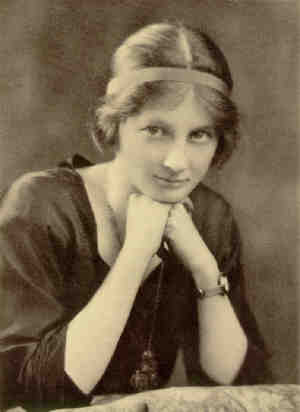
Ralph married Lady Margaret Cecilia Newbolt ,1 daughter of Sir Henry John Newbolt C.H., D.Litt. and Lady Margaret Edina Duckworth , on 2 Jun 1914 in Netherhampton, Nr. Salisbury, Wiltshire 1.,269 Celia was born in May 1890 in 14 Victoria Road, London, 319 died on 13 Jan 1975 in Exeter 320 at age 84, and was buried in St Edmund's Church, Dolton, Devon. 321
Marriage Notes: Ralph and Celia may well
have first met each other at Netherhampton Manor, a house which Celia's
parents shared with Ralph's father, Henry.
In the spring of 1907 Henry, a widower of nearly 20 years, was facing
the prospect of living alone — his remaining unmarried sister,
Margaret, having become engaged to marry William Robbins — and had
invited the Newbolts to come to live with him for a while. The
arrangement lasted for seven
years until the autumn of 1914 when Henry decided to take up residence
in Devon on the Furse family estate at Halsdon; Newbolts liked
Netherhampton
so much that they continued to live there for another 20 years.
In that spring of 1907 Ralph was 19 years of age and Celia 17. It is
not surprising that they fell in love; Celia was a most beautiful young
woman, Ralph a handsome and eligible young man and, moreover, because
of their family circumstances, they were regularly in each others
company. So
when, in October 1913, they finally announced their engagement, the
only surprise was that it had taken so long to happen. 322
Children from this marriage were:
+ 90 F i. Barbara Dolignon Furse was born on 3 Apr
1915, died on 27 Nov 1944 in The Cottage Hospital, Torrington, Devon
323 at age 29, and was
buried in St Edmund's Church, Dolton, Devon. 324
+ 91 M ii. Patrick John Dolignon Furse
+ 92 M iii. Nicolas Ralph Dolignon Furse
+ 93 F iv. Theresa Thomasin Furse
71. Michael
Hudson Furse 281,282 was born in 1893. 281 Another name for
Michael was Michael Hudson Abraham.282
General Notes: According to his son, Anthony, Michael changed his name in April 1939 because his brother-in-law, Wilfrid Freeman, who was on the Air Council, told Anthony's wife that war was then inevitable and knowing that his two sons were expecting to join the RAF, Michael thought that they would be better treated by the Germans in the event of them becoming POWs with the name of Furse rather than Abraham.
Michael married Sibyl Freeman 281 in 1922. Sibyl died in 1970
281 .
Children from this marriage were:
+ 94 M i. Charles Furse
+ 95 M ii. Anthony Furse
76. David
Gordon Roberts Furse 297
was born on 6 Mar 1900 297
and died on 28 May 1955 297
at age 55.
David married Hilda Gladys
Hill-Williams ,297
daughter of John Hill-Williams and Unknown .
Children from this marriage were:
96 F i. Janet
Mary Kemble Furse
Janet married Roger Mozley ,297 son of Bernard Mozley D.S.O. and Unknown .
97 F ii. Diana
Aileen Furse
Diana married Peter Talbot-King .328
80. Lt.
Commander Peter Reynolds Furse R.N. 297
was born on 29 Oct 1901 303
and died in 1970 303
at age 69.
General Notes: Settled in Canada
Peter married Babara Ross ,297 daughter of Hon. James
Hamilton Ross and Unknown , on 25 Jun 1931.297
Children from this marriage were:
+ 98 F i. Katherine Barbara Furse
+ 99 F ii. Elizabeth Graeme Furse
81. Rear
Admiral John Paul Wellington Furse C.B., O.B.E. was born on 13
Oct 1904 and died on 8 Oct 1978 304
at age 73.
General Notes: Paul's entry in WHO WAS WHO
for 1971-1980 reads:-
FURSE, Rear-Adm. (John) Paul (Wellington), CB 1958; OBE 1946; CEng;
FIMechE; FLS; retired; b 13 Oct. 1904; s of late Charles Furse, artist,
and late Dame Katharine, GBE, RRC, Dir, WRNS; m 1929, Cicely Rathbone,
one s. Educ: Osborne; Dartmouth; RN Engineering Coll., Keyham. Service
in Submarines, etc, 1927-39; Asst Naval Attaché, Europe and the
Americas, 1940-43; 5th and 4th Submarine Flotillas, 1943-46; Admiralty,
1947, Dir of Aircraft Maintenance and Repair, Admiralty, 1955-58;
Dir-Gen. of the Aircraft Dept, Admiralty, 1958-59; retired, 1959.
Botanical expeditions in Turkey and in France, 1960, 1962; Afghanistan,
1964, 1966. VMH 1965. Publications: articles on flora of the Middle
East in RHS Jl and Year Book, British Iris Soc.Year Book, Alpine Garden
Soc. Bulletins. Recreations: mountains, skiing, botany, painting.
Address: Hegg Hill, Smarden, Kent. T: Smarden 229. Club: Army and Navy.
[Died 8 Oct. 1978]. 299
Paul married Cicely "Polly" Rathbone
,303 daughter of
Frederick Rathbone and Unknown , on 7 Apr 1929.297 Polly died on 2 Sep 1991
329 .
The child from this marriage was:
+ 100 M i. Cmdr.
John Richard "Chris" Furse, OBE, RN
86. Cynthia
Lubbock 317 was born
in 1899. 317
Cynthia married Alister Wedderburn 317 in 1920. Alister died in 1968 317 .
Marriage Notes: Alister and Cynthia had
issue: 1 son and 3 daughters 317
General Notes: Alexander Henry Melvill
OGILVY WEDDERBURN was born on 1 Jul 1892 in 47 Cadogan Place London and
was christened on 7 Aug 1892 in Holy Trinity Sloane St London Sw. He
died on 23 Dec 1968.[Notes] <zapn15.htm> Alexander married
Cynthia Margaret LUBBOCK, daughter of Cecil LUBBOCK, in 1921
1892 Alexander Henry Melvill Wedderburn, only s. of Alexander Dundas
Ogilvy Wedderburn, Q.C., & Mathilde Segelcke [m. 1887] was b. on
1/7/1892 at 47 Cadogan Place, London, and bap. on 7/8/1892 at Holy
Trinity Church, Sloane St. (W.B. p. 351) [Alexander was President of
the Oxford Union in 1914; a captain in the Black Watch 1914-18;
Barrister at the Inner Temple 1917 (practised 1919-36); a Director of
Wedderburn & Mallett Ltd. & other companies, & a J.P. in
Berkshire in 1943. In 1921 he m. Cynthia Margaret Lubbock (e.d. of the
late Cecil Lubbock) & had a son & 3
daughters. (The son was killed in action in Singapore in 1960.) They
lived in Berkshire. Alexander died on 23/12/1868. ('Who Was Who',
1961-1970)]
The child from this marriage was:
+ 101 F i. Elizabeth Jane Wedderburn
Ninth
Generation 90. Barbara
Dolignon Furse was born on 3 Apr 1915, died on 27 Nov 1944 in
The Cottage Hospital, Torrington, Devon 323 at age 29, and was
buried in St Edmund's Church, Dolton, Devon. 324
Some things about her life:
• Report of death: 9 Dec 1944, London,
England. 330 The Times of
December 9, 1944 reported Jill's death thus:
Mrs. Whistler, formerly Miss Jill Furse, the actress, wife of Captain Laurence Whistler, and daughter of Major Sir Ralph and Lady Furse, of Halsdon Mill, Dolton, Devon, died in hospital at Torrington on November 27. Last month she gave birth to a daughter. Her first appearance on the London stage was made in 1936, and one of her greatest successes was in Rebecca at the Strand Theatre two years ago. She was a granddaughter of the late Sir Henry Newbolt, the author, poet, and naval historian and a descendant of Sarah Siddons. Her brother-in-law, Lieutenant Rex Whistler, Welsh Guards, the painter and book illustrator, was killed in Normandy soon after D Day.
Jill married Sir Alan Charles Laurence Whistler C.B.E. , son of Henry Whistler and Helen Ward , on 12 Sep 1939 in Salisbury Cathedral, Wiltshire. Laurence was born on 22 Jan 1912 326 and died on 19 Dec 2000 in Oxford at age 88. (See later)
Children from this marriage were:
102 M i. Simon
Laurence Whistler
Simon married Jennifer Helsham .331
+ 103 F ii. Caroline Jill Whistler
91. Patrick
John Dolignon Furse
Patrick married Elizabeth Wolpert
,325 daughter of Paul
Michael Wolpert and Unknown . Elizabeth died in 2002.
Children from this marriage were:
104 M i. John
Henry Furse
John married Sophia Dinkel .331
105 F ii. Katherine
Antoinette Dolignon Furse
Katherine married Claud Chelli .331
106 F iii. Anna
Fiore Dolignon Furse
Anna married Jack Klaff .331
107 F iv. Sara
Louisa Dolignon Furse
Sara married Dylan ——— .331
92. Nicolas
Ralph Dolignon Furse
Nicolas married Elizabeth Jane
Wedderburn ,332 daughter
of Alister Wedderburn and Cynthia Lubbock .
Children from this marriage were:
108 F i. Vanessa
Jane Dolignon Furse
Vanessa married Robb Jackson .331
+ 109 F ii. Miranda Jill Dolignon Furse
110 F iii. Corinna
Margaret Dolignon Furse
Corinna married Nicholas Whines .
+ 111 M iv. Mark Nicolas Ralph Dolignon Furse
Theresa married Sir Alan Charles Laurence Whistler C.B.E. , son of Henry Whistler and Helen Ward . Laurence was born on 22 Jan 1912 326 and died on 19 Dec 2000 in Oxford at age 88.
General Notes: FRIDAY DECEMBER 22 2000
Sir Laurence Whistler Artist and poet who
found his true medium in scratches on glass, and went on to create
mysterious
new worlds on bowls, goblets and windows Laurence Whistler revived a
forgotten craft and raised it to an art of timeless poignancy. He
always and overwhelmingly wanted to be a poet, but knew that he had not
fully succeeded in verse;
yet by engraving on glass he did far more than capture scenes: he
expressed
a whole spiritual sensibility. “I had found, by purest chance, a small
untrodden lawn of snow to write my name on with the point of a stick,”
he wrote.
The purest chance which gave him his vocation came in 1935, when as
the younger and overshadowed brother of the society painter, muralist
and
illustrator Rex Whistler, he decided to engrave a sonnet of his own
composition
onto a window in a friend’s house. After this original piece, he looked
to the 18th-century Dutch glass-engravers and created a new tradition.
He
modernised their pictorial technique and found subjects worthy of his
poetic
imagination, ranging from a cathedral of grass to the Apollo landings.
As
if words were insufficiently pure for him, he wrote instead in light.
As
John Jacob wrote in the catalogue to his exhibition Pictures in Glass
in
the 1970s, “light is really his medium, and the ambiguity, the
illusionistic
nature of glass itself, conveys that sense of ‘another’ light which
pervades
his work”.
Within a few years of his first efforts, he was engraving for royalty,
Oxbridge colleges and wealthy admirers wanting contemporary works of
art for their country houses. In six decades he was never short of
commissions.
Laurence Whistler was lucky enough to be educated at J. F. Roxburgh’s
newly opened public school at Stowe, where he measured and drew the
magnificent south front and several of the garden temples. From this he
progressed to imaginary classical elevations. Already he was using
two-dimensional fancies to suggest ideal realms. His first book of
poems, moulded by Spenser, Keats and Shelley, was published when he was
17.
Until he won his place at Balliol, he intended to become an architect,
like his aged relative Basil Champneys, who had designed Newnham
College, Cambridge, and through whom he became a friend of Sir Edwin
Lutyens. Looking back in 1975 he wrote “it is a career I am glad enough
to have avoided in the present age”, but in 1938 his interest led him
to write the first full biography of the architect and playwright Sir
John Vanbrugh. In a later book he ascribed a cache of drawings at the V
& A to the architect for the first time. He also perpetrated a
successful hoax by publishing some “Vanbrugh” drawings of his own
composition in Country Life, to which he was an occasional contributor
for many years.
In 1944 the deaths of his wife, the actress Jill Furse, and of his
brother Rex seemed to signal the end of Whistler’s world, yet with
hindsight they were keys that unlocked great creativity. Jill died
shortly after giving birth to their daughter, and Rex was killed in
Normandy. A process of cathartic writing in the years that followed
produced a short book about Rex, a sequence of poems about Jill, who
remained the love of his life, and a moving meditative biography of her
and their marriage, The Initials in the Heart (1964, reprinted
this year). Choosing a surprising word, Whistler later said that an
artist could “feast” on both sorrow and joy. Six years after Jill’s
death, he married her younger sister, Theresa, though the marriage was
later dissolved.
He continued to grieve all his life for Rex, convinced that he had been
the true artist of the family. He published a full biography, The Laughter
and the Urn, in 1985 and a few years later organised an exhibition
of Rex’s work at the National Army Museum. He also surrounded himself
at home with Rex’s drawings.
His early glass was engraved in the spirit of Rex — indeed in his wake
— and he admitted that it had taken him years to find his own idiom.
Early works include a casket for the Queen (now the Queen Mother), and
a hinged glass triptych to hold her daily schedule, which she has used
for almost 50 years. He also engraved some goblets for the present
Queen to give to the
French President.
Whistler’s growing insight into the medium began with two principles:
that engraving on glass must take account of its transparency, which
“calls for an illusionistic art”, and that “a curved picture is not to
be thought of as a flat one bent”. His goblets and bowls were imagined
in three dimensions, to be viewed from several angles. “I had begun to
envisage little worlds in the hollow of a bowl.”
Later goblets and bowls were intended for turntables, as were his
remarkable prisms. The greatest of these is a mem- orial to Rex in
Salisbury Cathedral (where Laurence had married his first wife, from
his parents’ home in the Close, in September 1939). As the large
triangular brick of Steuben crystal rotates, three views of the
cathedral emerge and disappear. Each picture is formed half of
engraving, right up to the prism’s edge, and half of internal
reflection.
Whistler also achieved effects of perspective and depth — or sometimes
of intersecting realms — by marking both the inside and the outside of
goblets, bowls or windows. Transition, inside-outness and fragility
became frequent themes. His best engravings are allegories of light and
life, and he repeatedly used symbols such as the ankh, paper boats on a
stream (of the sort he
had made for Jill), shadows, flowers or “the curve of the fountain and
the firework”.
He stippled at first with a diamond point, rather than etching with
acid or using a wheel, but later he adopted a carbon drill rather like
a dentist’s, and used the diamond only for the very finest work. The
engravings
show up best as white marks against a black background (though
galleries
do not always appreciate this), and throughout his working life he went
on experimenting with new possibilities for drawing in light.
Some of his finest work is to be found in quiet country churches. St
Nicholas at Moreton in Dorset gradually became a Whistler gallery, as
an original commission in 1955 for three apse windows inspired other
donors, until eventually he had engraved all 12 windows over three
decades. The transition
from the rather rigid formality of the East Windows to the burst of
galactic
energy over the West Door shows his growing nerve and verve about what
he
uniquely had to say, as well as his developing technique.
The church is the only one in the world with entirely engraved glass
windows, and the effect of the transparency is quite different from
that of stained glass. The interior is one with the churchyard; the
worshipper seems to have stepped into one of the ambiguous roomscapes
of Whistler’s goblets, where inside and outside appear as facets of one
another.
A ridiculous fuss was caused by the church authorities when Whistler
engraved a 13th pane, showing Judas Iscariot, for a small, blind
window. He was understandably distressed when an obtuse committee
questioned the taste and artistry of his gift (though he confessed that
he had never mastered the portrayal of figures on glass).
In later years Whistler’s hand and eye were naturally not quite so
reliable, but his imagination went on expanding, verging on the
mystical, and he adapted his work to depict less but suggest more. From
exact pictorial and portrait views he turned more and more to exuberant
visions.
Quintessentially English, he never stopped returning, actually and in
his mind, to the places he belonged to, and engraving his beloved
Salisbury, Oxford and Stowe. He had a deep feeling for a neglected
pastoral vein of 20th-century poetry, represented by his friends Ralph
Hodgson, Siegfried Sassoon
and Walter de la Mare, and his memorials include windows and panels for
Edmund
Blunden and Edward and Helen Thomas.
Five dazzling books of his glass were published between 1952 and 1985,
and a sixth is planned. There were also catalogues of his exhibitions,
most recently at Sotheby’s for his 80th birthday, and in Salisbury,
where his work was complemented by pieces by his son Simon, himself now
a full-time glass-engraver. In 1996 father and son collaborated on a
magnificent panel for the Jacqueline du Pré Music Room in Oxford,
showing the cellist as the embodiment of her music.
In 1935 a committee including I. A. Richards and John Masefield awarded
Whistler the first King’s Gold Medal for Poetry, and he published
numerous volumes of poems over the next twenty years, and occasionally
afterwards. His verse is formally inventive — he experimented, for
instance, with rhymes at the beginning rather than the end of lines —
but he was never quite
a master of the sound of words.
His prose is another matter, perfectly controlled, elegant, unsparing.
How unlikely it was, as she had said, that we should have found one
another “in such a crowd”. The war came, and there were still five
years.
Perhaps one should see life as a bonus always? If one deserves nothing,
ought one to expect anything? It would certainly be gay if this notion
could be sustained. Compared with some we were patently unlucky. But
compared
with others? — those, for instance, who had travelled across Europe,
waterless,
in cattle-trucks . . . All human comparisons are meaningless. There is
only luck. And luck is always unique, with its never-repeated, its
unrepeatable,
challenge.
In 1975 Whistler helped to establish the Guild of Glass Engravers,
composed largely of people inspired by his example. He served as its
first president, and was represented by a number of pieces at its 25th
anniversary exhibition in London this autumn. He was appointed OBE in
1955 and advanced to CBE in 1973.
A debilitating stroke in 1998 confined him to hospital in Oxford, but
he went on planning new work and his mind continued to explore the
realms he had long inhabited. He was knighted this year.
Whistler’s sensibility was instinctively metaphorical, and he pictured
the world in unfashionably transcendent terms, as when he wrote:
“Rhyming and ambiguity can appear anywhere, but the best examples are
to be seen in mountains and high hills . . . sometimes the answering
could almost make one laugh . . . and the meaning of the whole world
would be revealed as silent music.” In a late letter he asked whether
anyone cared any longer for such religious ideas, but his own life took
on just such a shape, as he served the people and enhanced the places
that had made him. He was a Christian of complete integrity, whose life
was spent wondering at man’s place in
the universe.
He was married for a third time in 1987 to Carol Dawson, but the
marriage was dissolved in 1991. He is survived by a son and a daughter
from his first marriage and a son and a daughter from his second.
Sir Laurence Whistler, CBE, glass-engraver and writer, died on December
19 aged 88. He was born on January 21, 1912.
Children from this marriage were:
112 M i. Daniel
Amor Whistler
113 F ii. Frances
Delamore Whistler
Charles married Judith ——— .281
Children from this marriage were:
114 F i. Theresa
Furse
Theresa married Mark Bell .282
115 F ii. Catherine
Furse 281 was born in
1956 281 and
died in 1959 281
at age 3.
116 M iii. Adam
Furse
117 M iv. Benjamin
Edward Pepperrell Furse
95. Anthony
Wooward Furse son of Michael Hudson Furse and Sibyl
Letitia Freeman, was born on 13 Feb 1926 in London 281 and died on 7 Sep 2012 in
Mold, Flintshire at age 86.
Anthony married Sara Elizabeth McCosh, daughter of Andrew
Kirkwood McCosh, D.L. and Elizabeth Marshall. 281
Children from this marriage were:
+ 118 F i. Jane Elizabeth Furse
+ 119 M ii. Richard Charles Furse
+ 120 M iii. William David Woodward Furse
+ 121 M iv. Andrew Michael Furse
122 M v. Patrick
Martin Furse 281,282 was born on 3 Jan 1966
281,282
and died on 30 May 1993 282
at age 27.
Katherine married John Hooper
A.R.C.A. , son of C. Owen Hooper and Unknown .
Children from this marriage were:
123 F i. Susan
Hooper
124 M ii. Rafe
Hooper
125 M iii. John
Hooper
Elizabeth married Dr Richard M
Briggs .297
Children from this marriage were:
127 F i. Amanda
Briggs
128 M ii. John
Briggs
Elizabeth next married John Platt .303
100. Cmdr.
John Richard "Chris" Furse, OBE, RN was born on 10 Jun
1935 and died on 30 Oct 2018 at
age 83.
Chris first married Faye Thurleigh
Redding ,297 daughter of
Alan Redding and Unknown .
The children from this marriage were:
129 M i. Ralf
Furse
130 M ii. Paul
Furse
Later, Chris married Victoria Saker
101. Elizabeth
Jane
Wedderburn
Jane married Nicolas Ralph Dolignon Furse ,327 son of Sir Ralph Dolignon Furse K.C.M.G., C.M.G., D.S.O. and Lady Margaret Cecilia Newbolt .
(Duplicate Line. See Person 92 )
Tenth
Generation Robin married James Ravilious , son of Eric Ravilious and Tirzah Garwood . James was born in Sep 1939 and died in Oct 1999 at age 60.
General Notes: James was a photographer by
profession who found his subjects in the villages and countryside of
Devon where he lived for most of his working life. He published several
collections of his work.
After his death, following many years of suffering from leukemia, a
fellow photograph described him as "one of the most talented and
sensitive
photographers of English country life from the 1970's and forward."
Children from this marriage were:
131 M i. Ben
Ravilious
109. Miranda
Jill Dolignon Furse
Miranda married Carl Johnson .331
Children from this marriage were:
133 M i. Jack
Johnson
134 F ii. Tess
Jane Dolignon Johnson
111. Mark
Nicolas Ralph Dolignon Furse
Mark married Heather Campbell .331
Children from this marriage were:
135 M i. Samuel
Robert Furse
136 F ii. Alice
Jane Furse
Jane has two children:
i. Anna Elizabeth Rathbone Furse
ii. Simon Francis Rathbone Furse
Richard married Dame Clara Hedwig
Frances Siemens, DBE, daughter of Herman Werner Siemens and
Countess Cornelie Schimmelpenninck. .281
Children from this marriage were:
138 F i. Cornelia
Sara Furse
Cornelia married Charles Southern, son of Timothy Southern.
Cornelia and Charles have
a son: Jasper Southern
139 M ii. Maximillian
Jasper Furse
140 M iii. Ralph
Patrick Furse
120. William
David Woodward Furse
William married Frances Phyllida L
Wright, daughter
of Graham Wright and Hermione Jones.282
Children from this marriage were:
141 M i. Alexander Michael Edward Furse
142 F ii. Sophia
Elizabeth Patience Furse
143 F iii. Laetitia
Faith Furse
Michael married Jane Elizabeth
Harding .282
Children from this marriage were:
144 M i. John
William Pepperrell Furse
145 F ii. Katharine Elizabeth Marshall Furse
146 F iii. Amelie
Poppy Harding Furse
Eleventh Generation The child from this marriage was:
147 M i. Oscar Furse
